

Our Blog
Blog Categories:
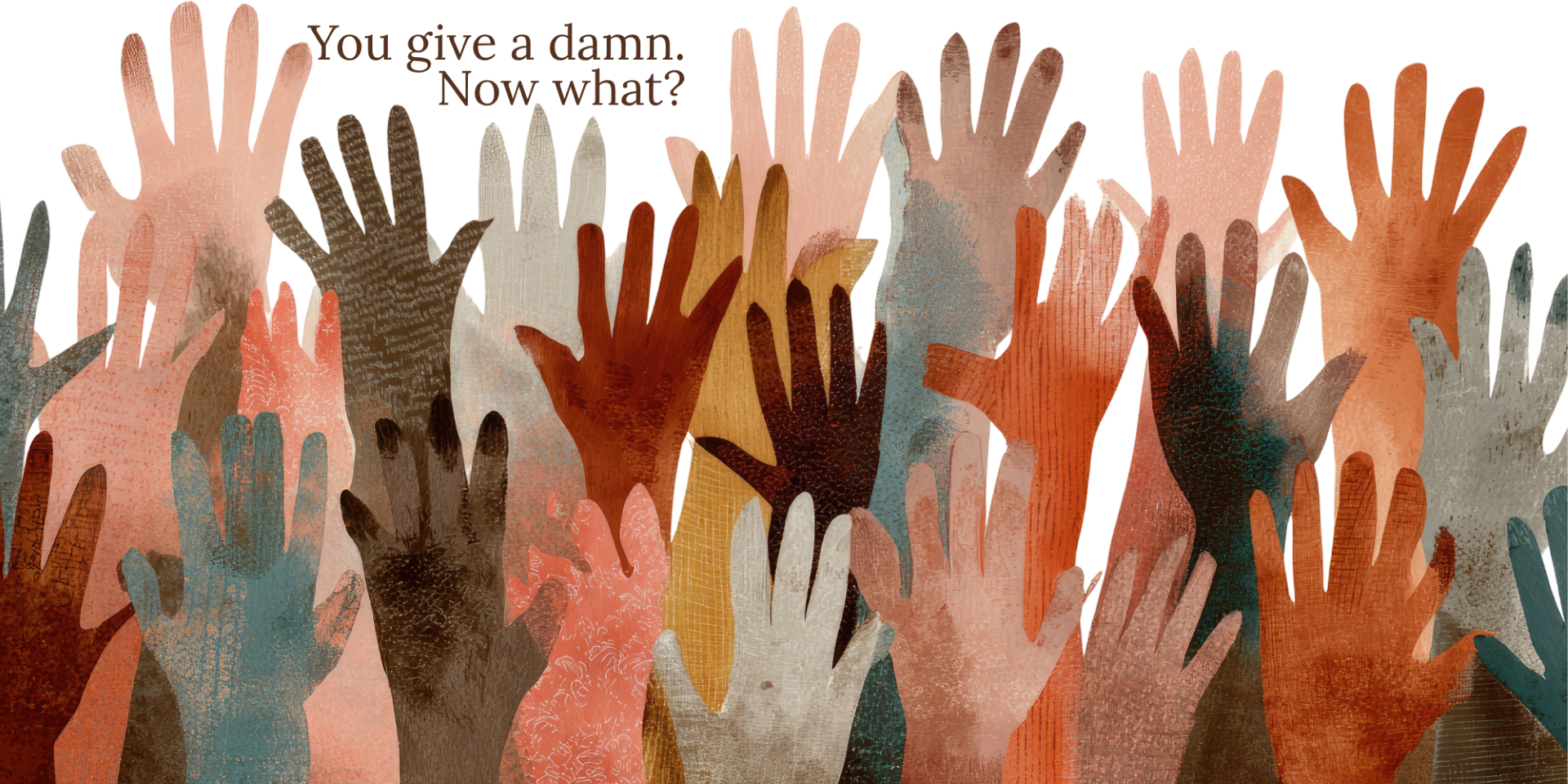
You Give a Damn. Now What?
Most advocacy starts with something you already have.
You care about something. You notice something that doesn’t sit right. You have an experience that changes how you see an issue. You see a gap between how something works and how it could work. Or you know someone whose experience has made that gap impossible to ignore.
Maybe you have a voice you’re willing to use, a connection you’re willing to share, or the persistent sense that surely we can do better than this.
For a long time, “advocate” was a fuzzy word to me. An advocate was someone who did something important or helped someone somehow. In corporate life, we “advocate for a position” or “advocate for an employee,” which usually meant making a case in a meeting and hoping PowerPoint would carry the day.
I didn’t think much about advocacy as a practice. Which is funny, because apparently I was already doing it.
Nuclear Age 2.0: Why Thorium Molten-Salt Reactors Change the Governance Equation
Daryl Wallace argues that thorium molten-salt reactors and factory-built SMRs are different enough from conventional nuclear technology to require an entirely new regulatory framework, not just new permits under old rules. He contends their passive "safe-to-fail" design, waste-consuming fuel cycles, and standardized factory certification (unlike bespoke megaprojects such as Vogtle) address the core hazards nuclear law was built around — meltdown risk, waste accumulation, and one-off construction — making a purpose-built "Nuclear Age 2.0" licensing system both necessary and achievable.

Muffins with Mom and the Mothers We Cannot See By Ashley Stout
In “Muffins with Mom and the Mothers We Cannot See,” a simple school breakfast becomes a reflection on motherhood, privilege, displacement, and global inequality. From the perspective of a Colorado parent, the author connects the everyday joy of watching children begin a new school year with the very different realities faced by refugee mothers, families living with illness or insecurity, and communities affected by conflict and climate-related disasters. The article explores how global citizenship begins locally—through welcoming newcomers, supporting refugee families, advocating for human rights, and building communities where every child can feel safe and included. Ultimately, it is a reminder that gratitude for our own ordinary moments can become a responsibility to help create those same opportunities for families who are beginning again.
The Conscious Food Systems Summit, Bhutan’s Approach to Food and Agriculture Policy
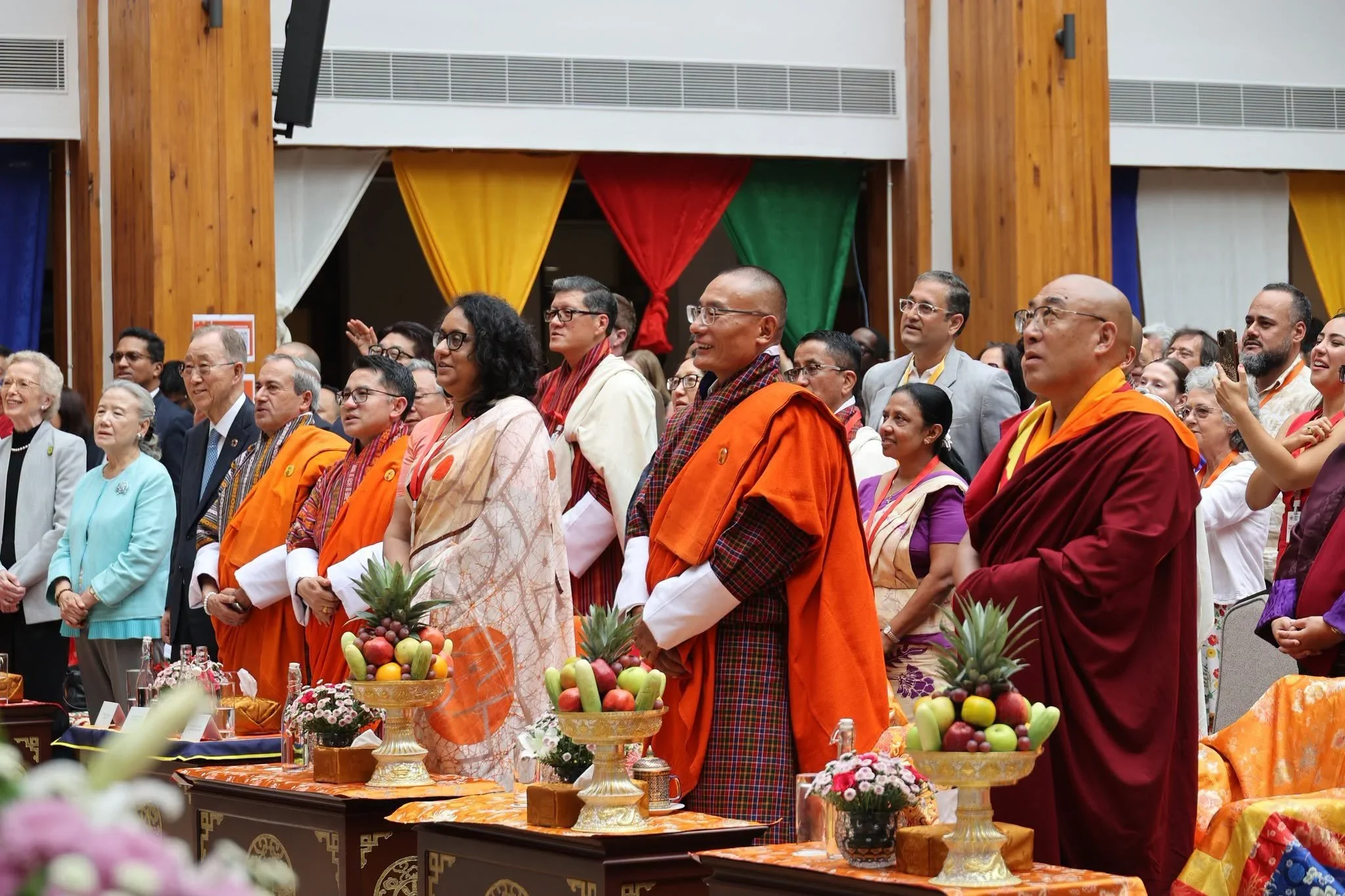
Audrey Patton: Bhutan's first-ever Conscious Food Systems Summit, held August 31 to September 4, 2026. The summit brought together world leaders, UN officials, farmers, and wellness experts to explore how values and mindset — rather than just policy mechanics — can address the global hunger and climate crisis. Over five days, the event moved from confronting the scale of the food crisis, to mapping a multi-year Conscious Food Systems Framework, to showcasing Bhutan itself as a "living laboratory" shaped by its Gross National Happiness philosophy, and finally closing with traditional Bhutanese rituals symbolizing renewal and collective action. The article frames Bhutan's slower, values-driven approach to food and agriculture as a potential model for the rest of the world as climate change and resource scarcity intensify.
Investing in Brazil’s Youth Through Education
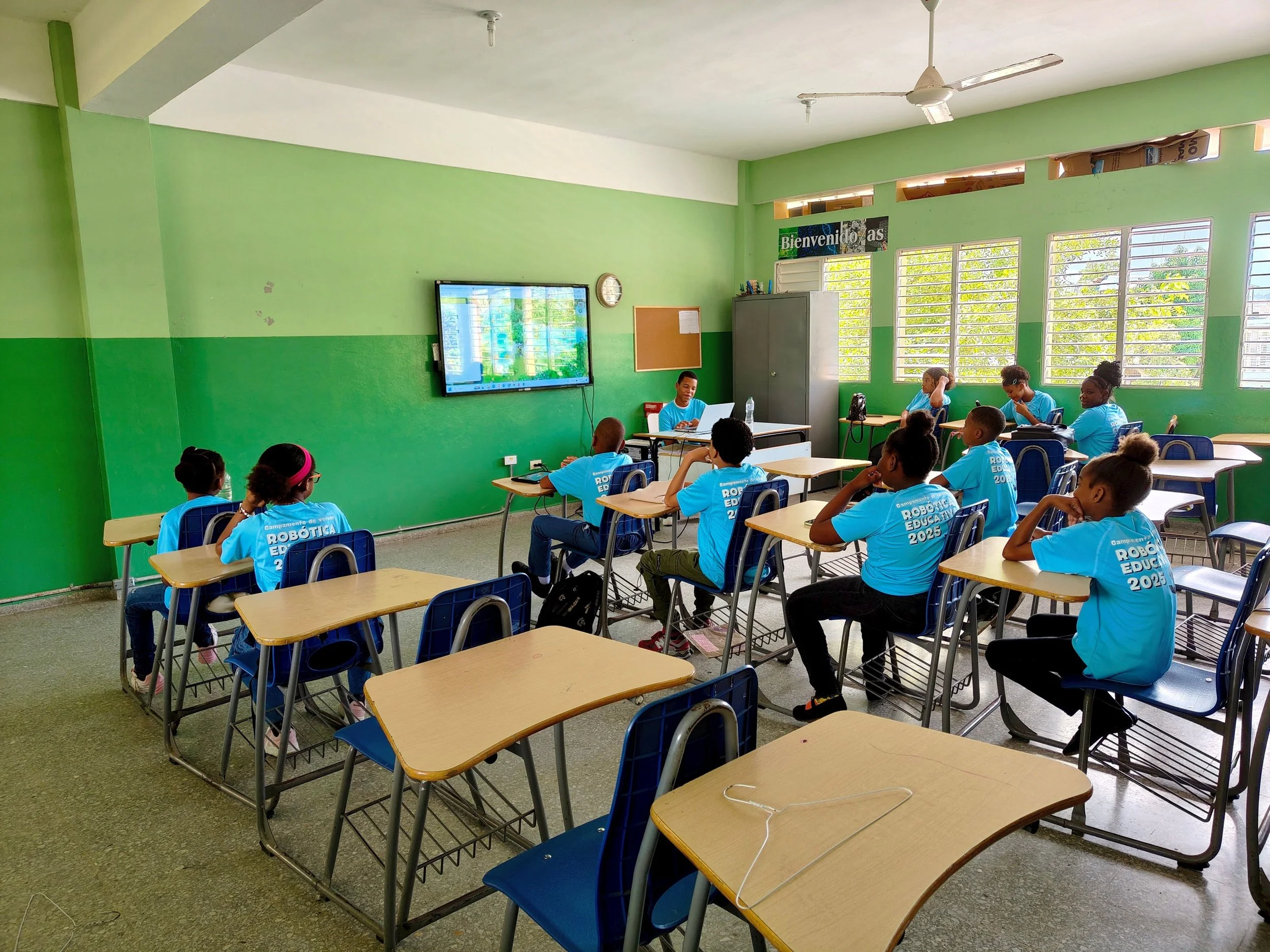
Nearly one million Brazilian children and adolescents were out of school in 2024, including indigenous and low-income youth disproportionately affected. While educational inequality remains a significant challenge in Brazil, communities in Colorado are working to address and help solve this issue. Through the Colorado chapter of Partners of the Americas, Colorado residents can support educational partnerships that provide professional development for Brazilian teachers and help strengthen the opportunities for youth.
De-Risking Impact: Why ESG and SDG Investors Must Re-Evaluate Frontier Hard-Tech
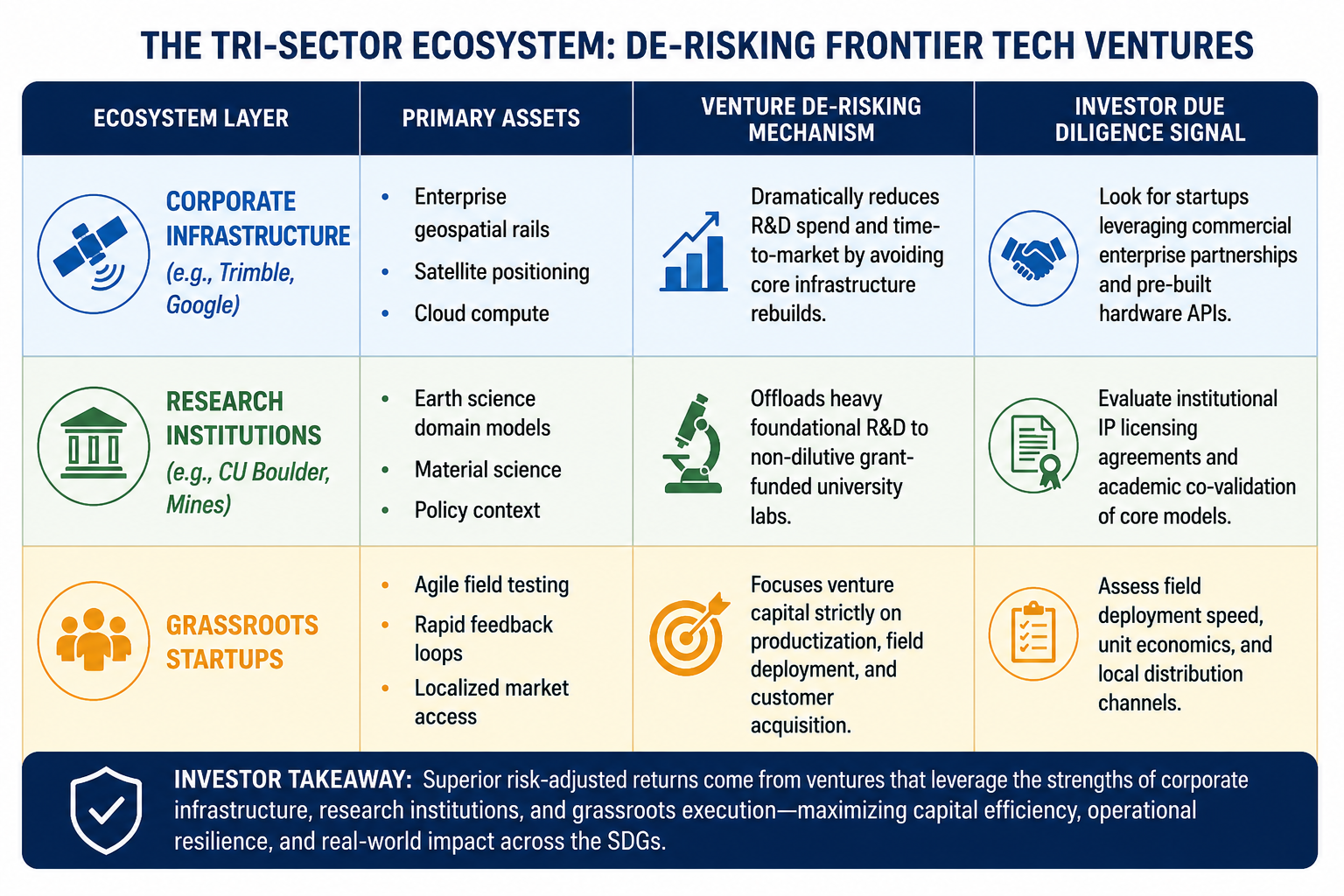
This article argues that investors in ESG, SDG, and global-development technology need to rethink how they assess frontier-tech ventures. Rather than avoiding capital-intensive hardware, spatial AI, and technologies operating in challenging markets, investors can identify opportunities where startups have already reduced risk through partnerships with corporations and research institutions, strong local knowledge, resilient edge-based technology, and data-sovereign architectures. Using Colorado’s innovation ecosystem as an example, the article presents practical due-diligence signals for evaluating capital efficiency, operational resilience, and scalability—and makes the case that the next generation of high-impact, venture-scale returns will come from technologies designed to succeed in the real world, not just the cloud.
Dependency Theory and Ghana's Cocoa Economy
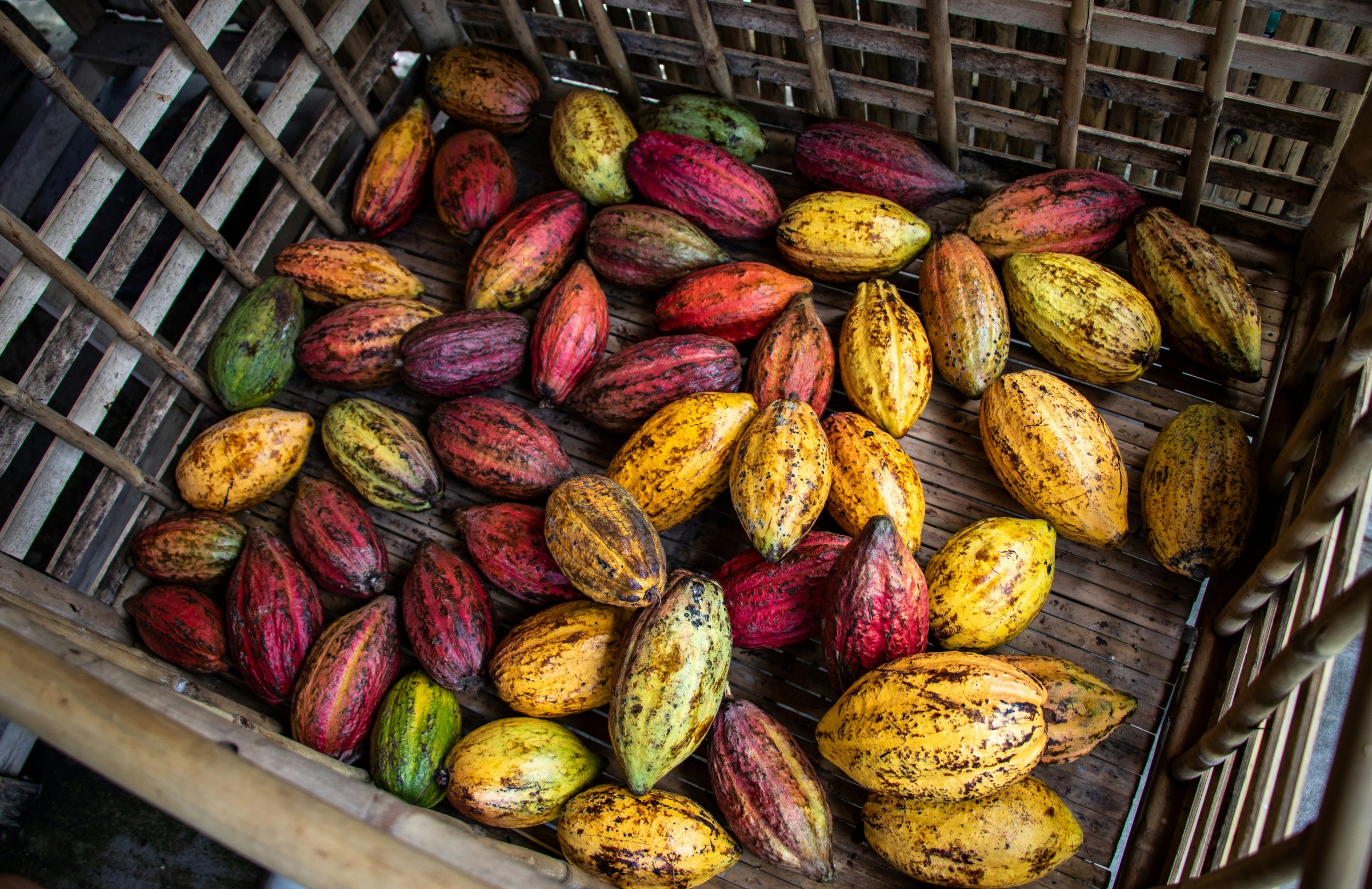
Ghana, despite abundant natural resources, remains economically disadvantaged due to colonial-era extraction patterns. As the world's second-largest cocoa producer, Ghana exports raw beans rather than processed chocolate, leaving most value captured abroad while up to 90% of local farmers earn below a living income. COCOBOD's monopoly control over pricing hasn't solved this. Dependency theory explains the pattern: Global South nations export raw materials, then reimport finished goods, generating profit for the North. Ghana is countering this through economic nationalism, diversifying into oil, partnering with Côte d'Ivoire via CIGCI for fairer cocoa prices, and supporting domestic chocolate producers like Niche.
Nepal’s Flood Disaster: The UN Response as Death Toll Surpasses 900
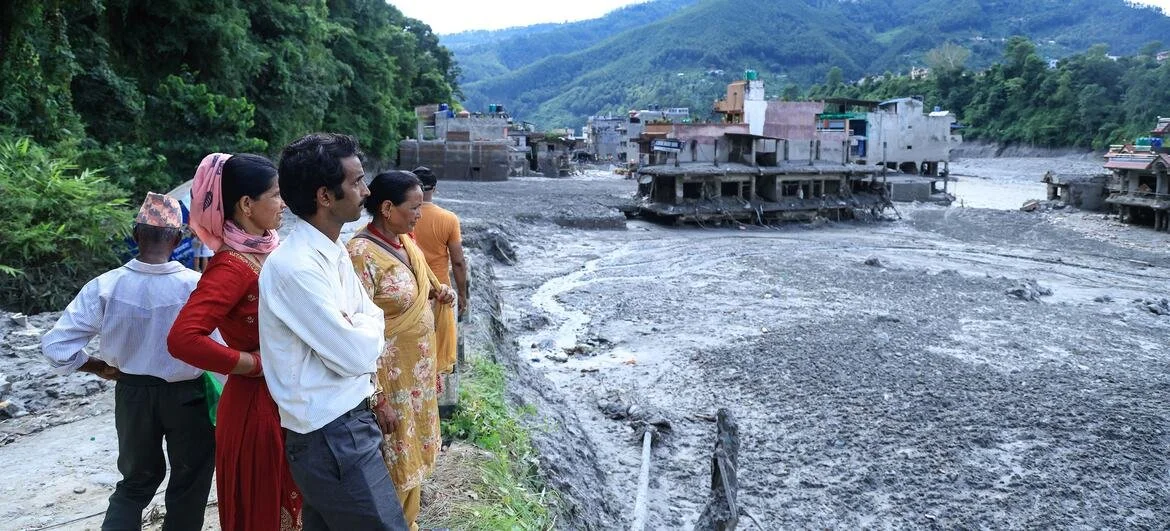
Nepal is facing its deadliest natural disaster since the 2015 earthquake, with flooding and landslides killing more than 900 people and leaving thousands missing. As rescue teams struggle to reach isolated communities, the United Nations is supporting the Government of Nepal through emergency food, healthcare, clean water and sanitation, nutrition, child protection and humanitarian coordination. WFP, UNICEF, WHO, OCHA and other UN agencies are working to reach the most vulnerable—including children, pregnant women and displaced families—while warning that the disaster highlights the growing risks that climate change and melting glaciers pose to Nepal’s mountain communities.
Announcing IMUN3: Our Third Inter-Generational Model United Nations: The Black Sea Grain Framework 2027
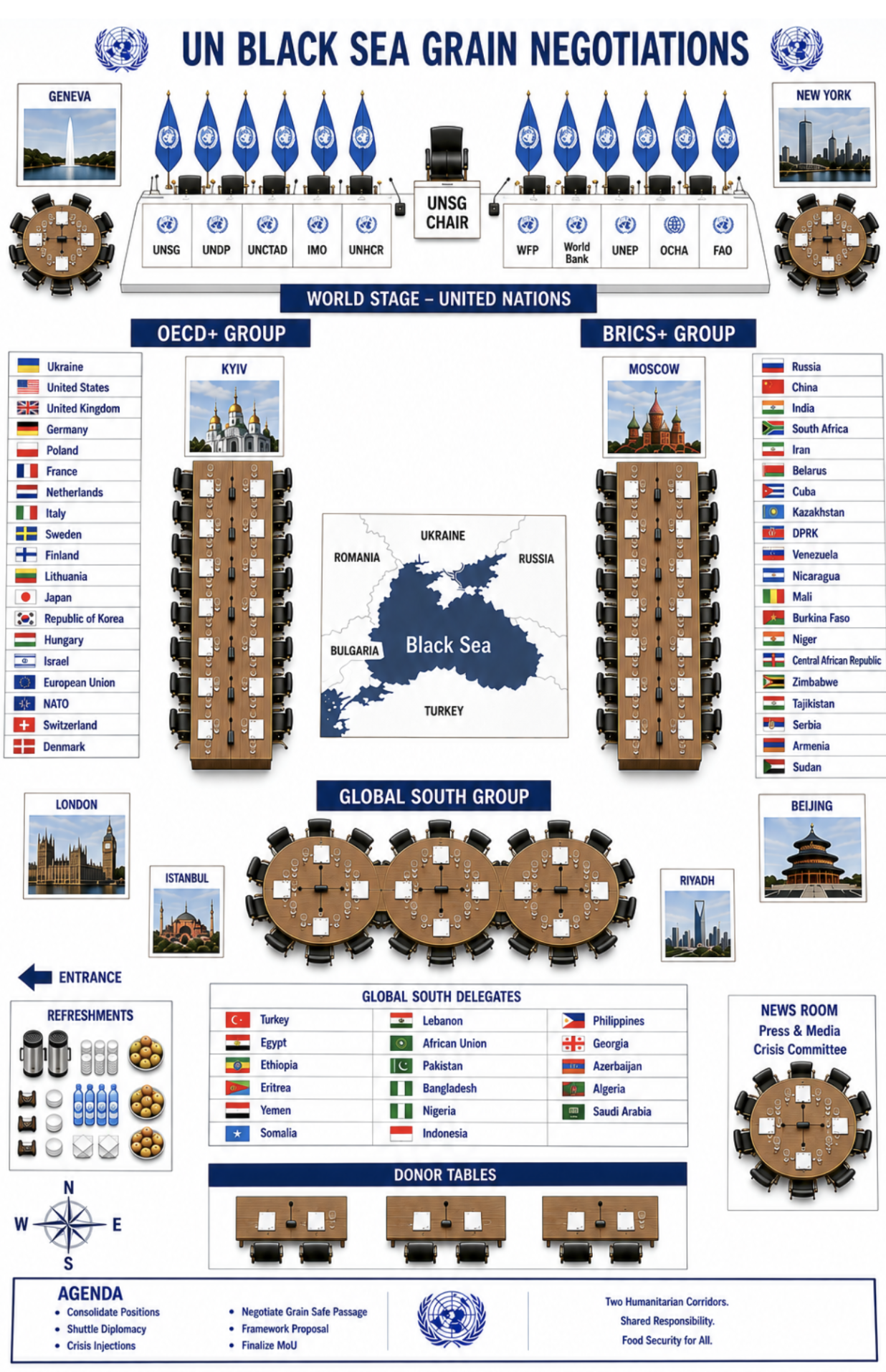
Step Into the Room Where Food and War Meet brings participants into an immersive, intergenerational Model United Nations simulation focused on the future of Black Sea grain exports and global food security. On January 23, 2027, high-school students, university students, seniors, and community members will represent countries and international institutions—including Ukraine, Russia, Turkey, China, the United Nations, and the World Food Programme—and negotiate a new framework for moving food through a conflict zone. With a floor-sized Black Sea map, shuttle diplomacy, a live newsroom, and unexpected crisis scenarios, delegates will confront real-world challenges including de-mining, inspections, war-risk insurance, sanctions, grain origins, and famine risk. By the end of the morning, participants will have experienced the pressures of international diplomacy firsthand and worked to produce—and potentially secure agreement on—a Black Sea Grain Framework 2027.
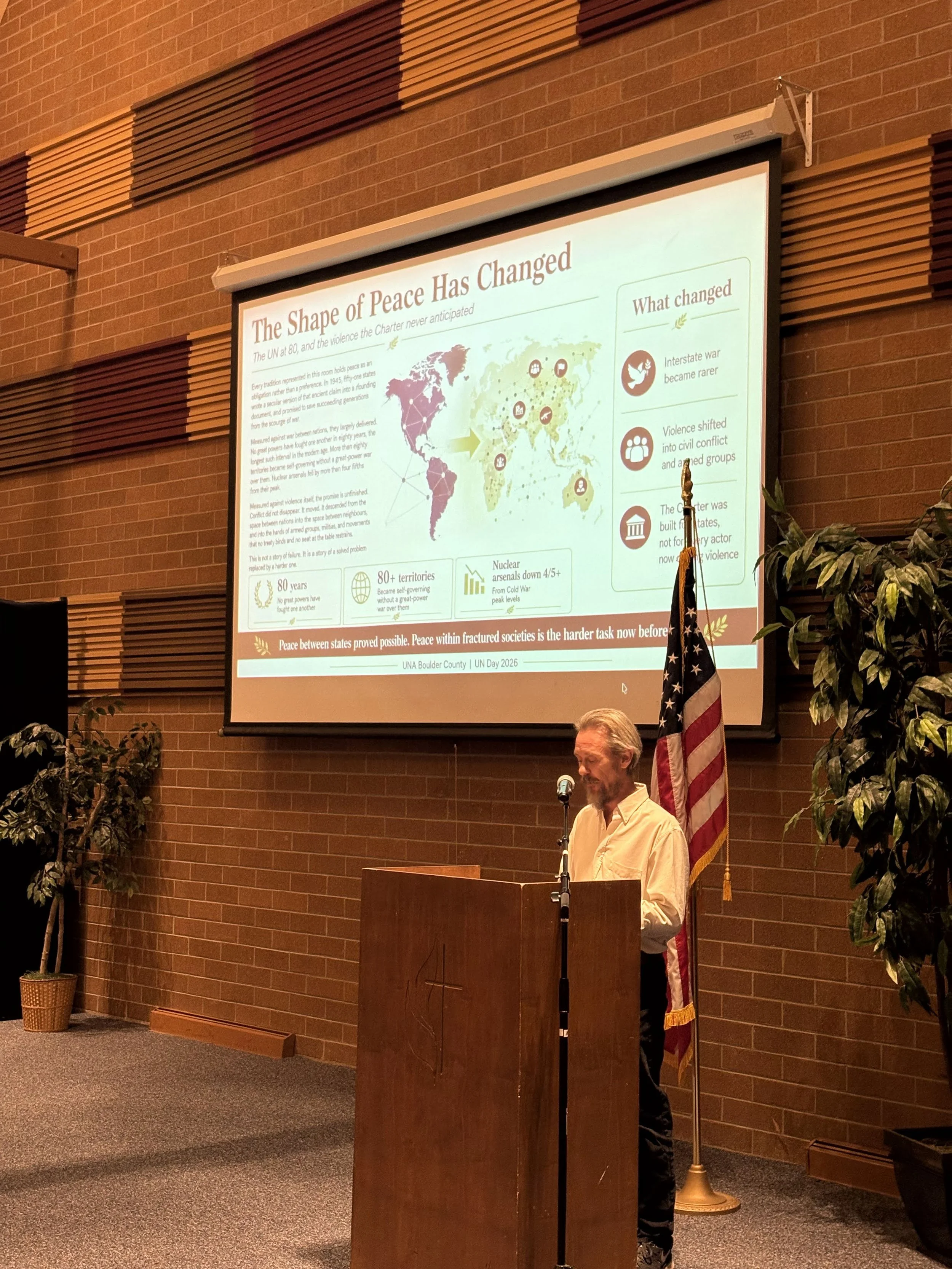
UN Day Of Peace Presentation By Daryl Wallace, President of Colorado’s United Nations Association In Boulder
The presentation given before an inter-faith audience for the UN International Day of Peace held August 29th 2026 by the Brahma Kumaris in Denver.
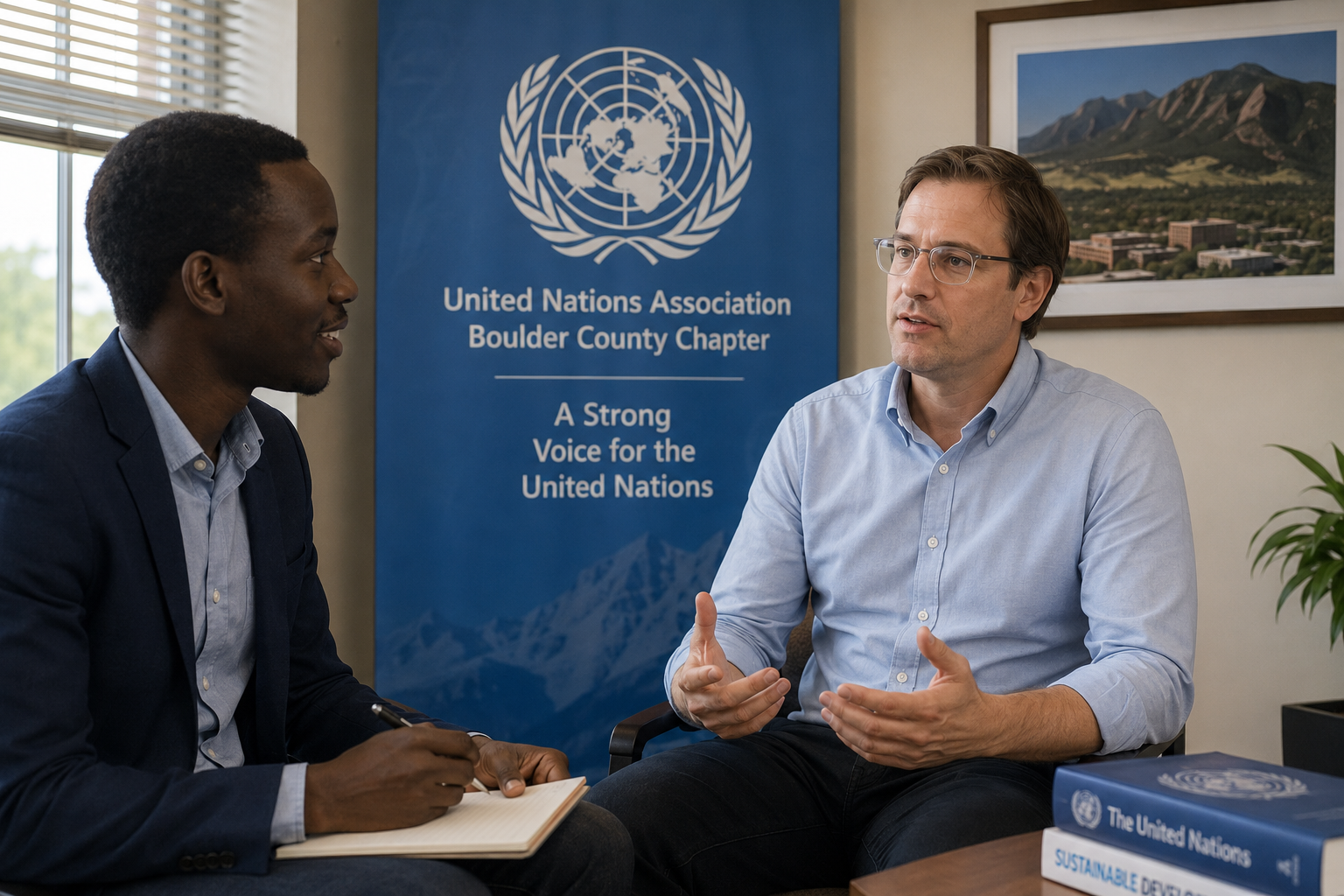
Interview with Matija Vidmar: The Future Of AI For Africa
In an interview conducted by George Lucky Okello, AI Solutions Architect Matija Vidmar delivers a pragmatic analysis of artificial intelligence's potential and risks across developing nations, with a sharp focus on Africa. Vidmar argues that while AI can extend scarce local expertise in critical sectors like healthcare and agriculture, its impact is often modest rather than revolutionary, as demonstrated by maternal health initiatives in Kenya. He highlights the existential threat AI poses to traditional economic development by automating entry-level outsourcing jobs—a vital ladder for young, female workers—while urging African firms to build defensible value by leveraging unique local data and niche technical capabilities rather than competing on low labor costs. Ultimately, Vidmar contends that Africa's strategic challenge is not merely accessing AI but owning it, warning that without aggressive policy choices and investments to address severe infrastructure deficits in power, connectivity, and data center capacity, AI risks widening existing global economic gaps rather than narrowing them.
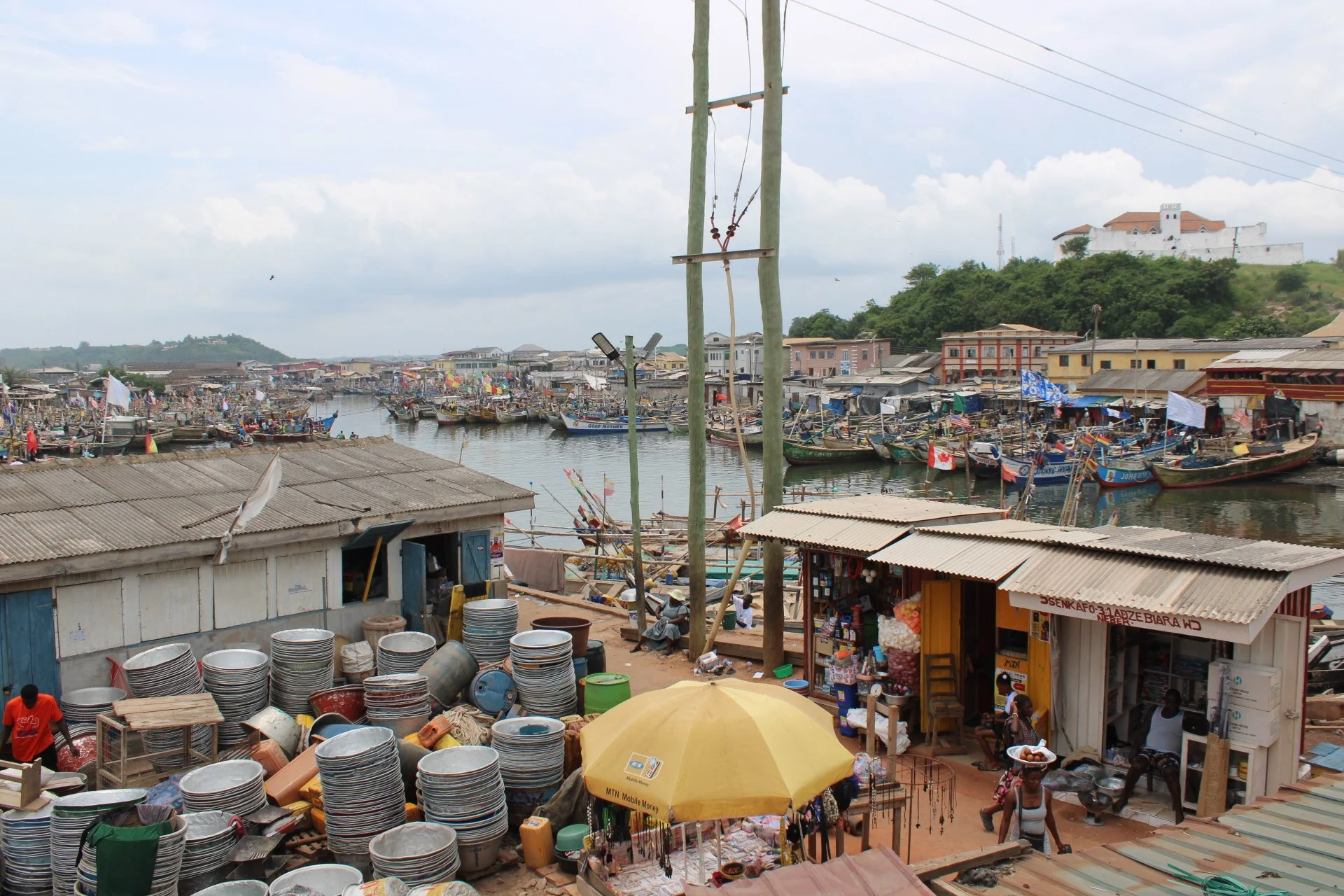
What Happens When Foreign Aid Disappears?
Earlier this year, I had the opportunity to travel through Africa, Asia, and Europe. Being there completely changed the way I look at foreign aid. Before traveling, it was easy to hear millions or billions of dollars being discussed and see it as another government expense. After being there, I don't see it that way anymore.
I saw communities where access to healthcare, clean water, food, and other basic resources is not something everyone can count on. I met people, talked to families, and saw firsthand that decisions being made thousands of miles away have very real consequences for people on the ground. That is why cuts to foreign aid matter.

Peace Is Possible: Boulder Comes Together for Peace Weeks 2026
Join UNA Boulder and the broader Boulder community for Peace Weeks 2026, September 13–27, celebrating the United Nations International Day of Peace. With keynote speakers, expert panels, music, art, community gatherings and the Peace Faire, the two-week celebration offers many ways to explore how peace can be built locally and globally. Highlights include a keynote from UN Peace and Humanitarian Fund leader Tonni Ann Brodber, the Jim Swaeby Peace Award, and the free Peace Faire at Boulder Creek Park. Come learn, connect, meet local peacebuilders—and discover why “Peace is Possible.”
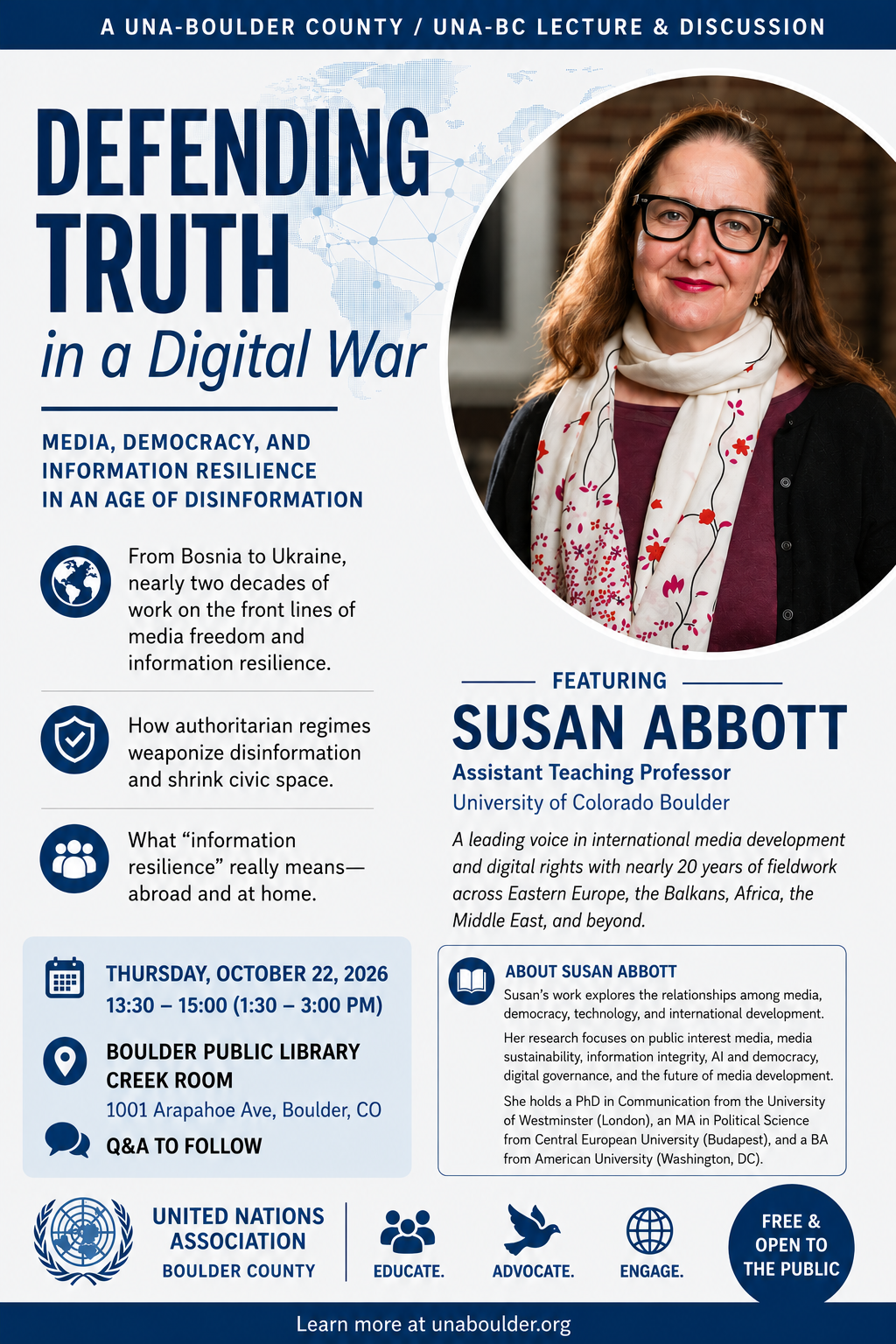
Can the World Defend Truth Fast Enough? Susan Abbott on Media, Democracy, and the Global Fight for Information Resilience
Susan Abbott, a leading voice in international media development and digital rights, draws on nearly two decades of fieldwork across Eastern Europe, the Balkans, Africa, and the Middle East to ask whether the international system can defend truth and press freedom fast enough to keep pace with digital-age threats. From Bosnia's post-war reconstruction to Ukraine's wartime information defense, she'll examine how authoritarian regimes are weaponizing disinformation and shrinking civic space worldwide, how shifting donor priorities are reshaping the future of independent journalism, and what "information resilience" really means — not just for the countries receiving aid, but for democracies here at home. A UNA-Boulder County event, free and open to the public, with Q&A to follow.
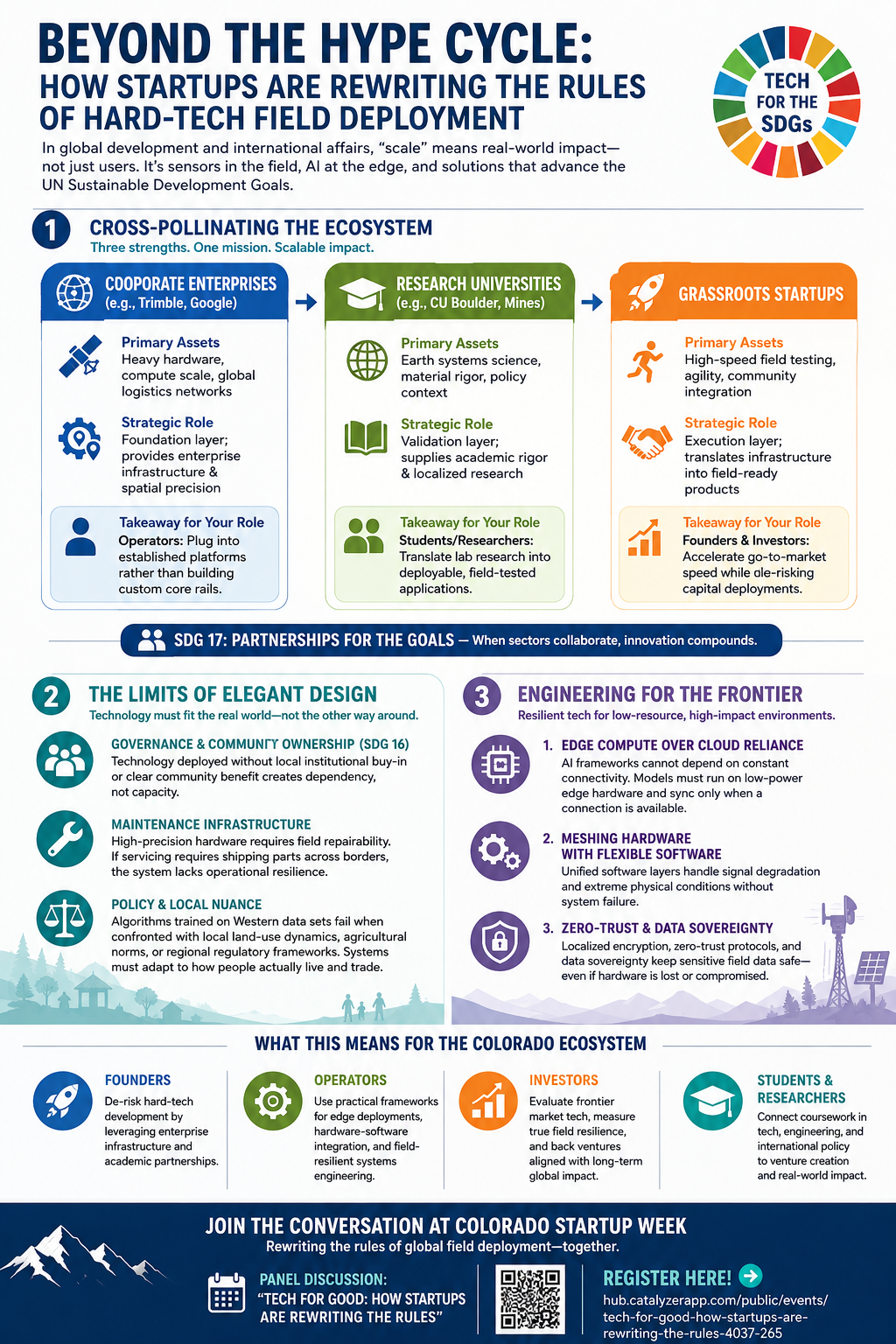
Beyond the Hype Cycle: How Startups Are Rewriting the Rules of Hard-Tech Field Deployment
In “Beyond the Hype Cycle,” Vikram Gopalan examines what it really takes to move hard-tech innovation from promising prototypes to durable, real-world impact. He argues that startups working across global development and frontier environments must look beyond conventional ideas of scale, combining corporate infrastructure, academic expertise, and grassroots agility with technologies designed for low-bandwidth, resource-constrained conditions. The article offers a practical framework for founders, investors, operators, and researchers seeking to turn emerging technologies into resilient solutions that advance the UN Sustainable Development Goals.
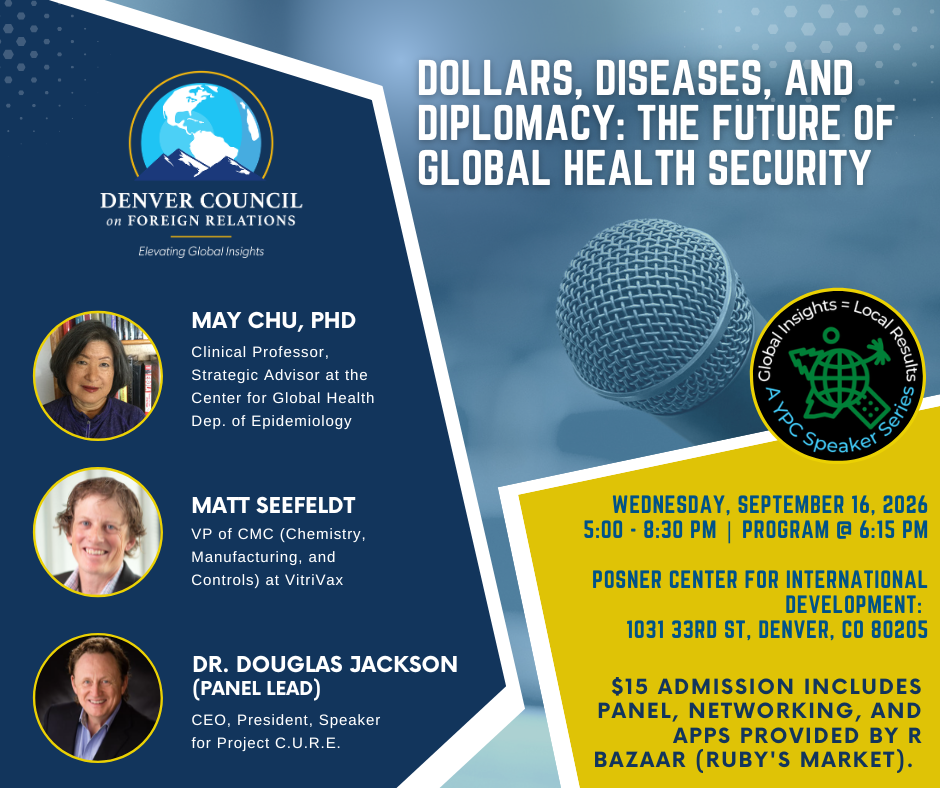
The Future of Global Health Security: DCFR Hosting at the Posner Center On September 16, 2026,
Global health security is being reshaped by shifting funding priorities, international politics and disruptions to the systems built to protect populations worldwide. Join experts from global health, biotechnology and humanitarian response for a timely discussion on what these changes mean for international security—and for Colorado communities.
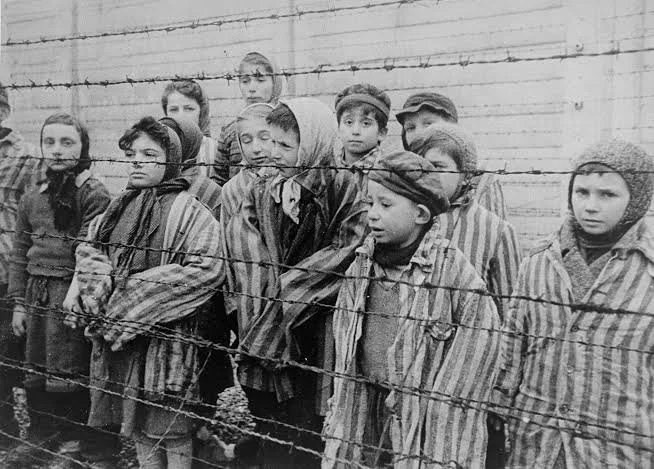
Let Youth Grow Before We Ask Them to Save the World
This article argues that there is an important difference between educating children about the world's problems and recruiting them into causes. Issues such as climate change, refugees, human rights, war and genocide involve profound moral dilemmas, competing interests and unintended consequences that children may not yet have the experience or emotional maturity to navigate. At a time when youth mental-health indicators are already deeply concerning—40% of U.S. high-school students reported persistent sadness or hopelessness in 2023 and 20% seriously considered suicide —we should be particularly cautious about burdening children with responsibility for solving global crises. The goal of education should instead be to develop compassionate, questioning and independently minded young people: teach them about the world's problems, but give them the childhood, knowledge and intellectual freedom to decide for themselves, when they are older, which causes they choose to fight for.
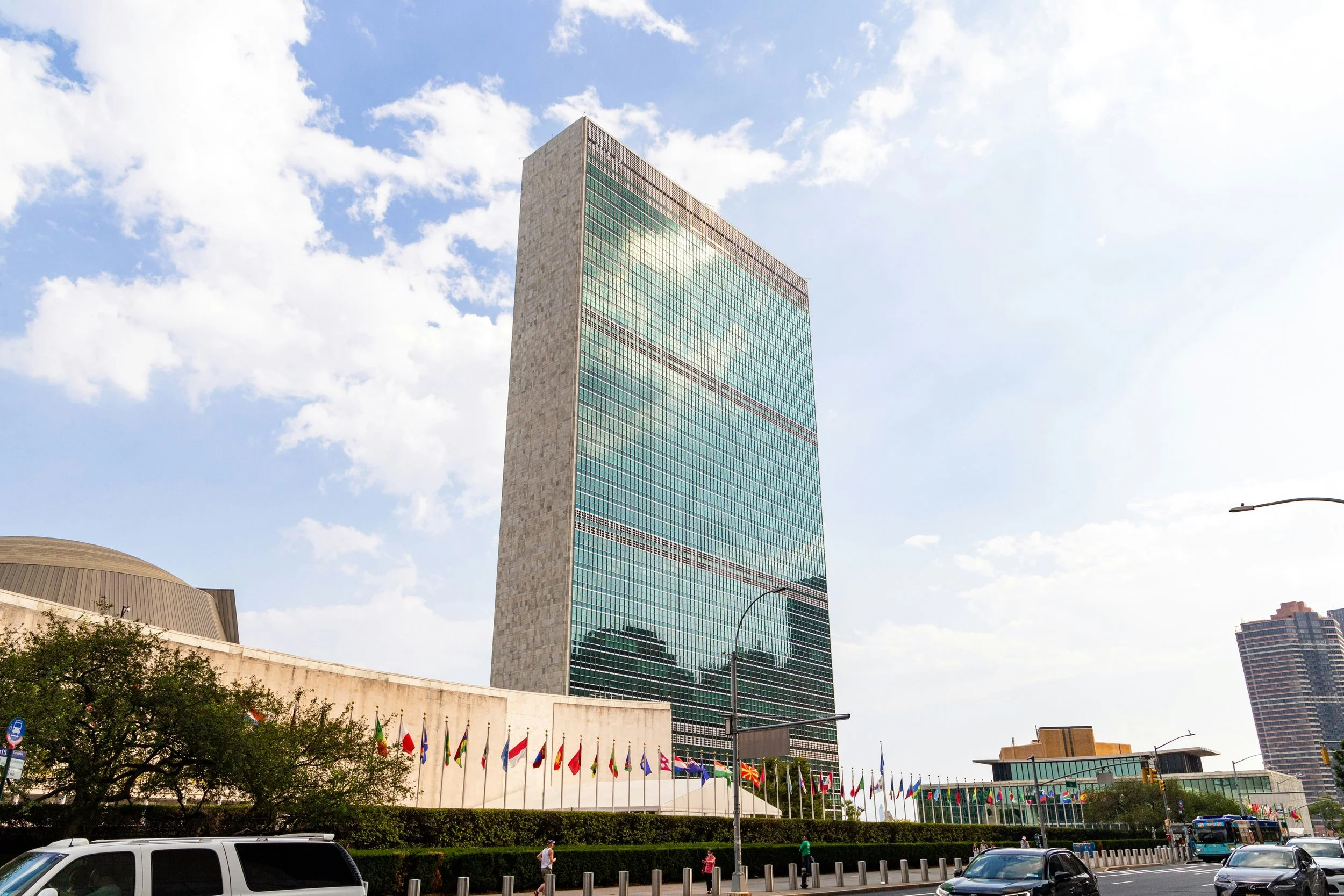
Youth Voices at the UN: Reflections on AI, Equity, and Global Inclusion
Sierra Bulk recently attended the Youth and AI Summit at UN Headquarters in New York, where over 700 young people, diplomats, and UN officials gathered to shape a youth-led declaration on AI policy for the UN's Global Digital Compact. The summit centered on two big ideas: AI must be built as a global public good with equitable access for underrepresented regions, and it must preserve, not erase, cultural identity and human connection. As AI's influence grows, the message was clear: real progress depends on inclusive governance, strong safeguards, and keeping young voices in the room.
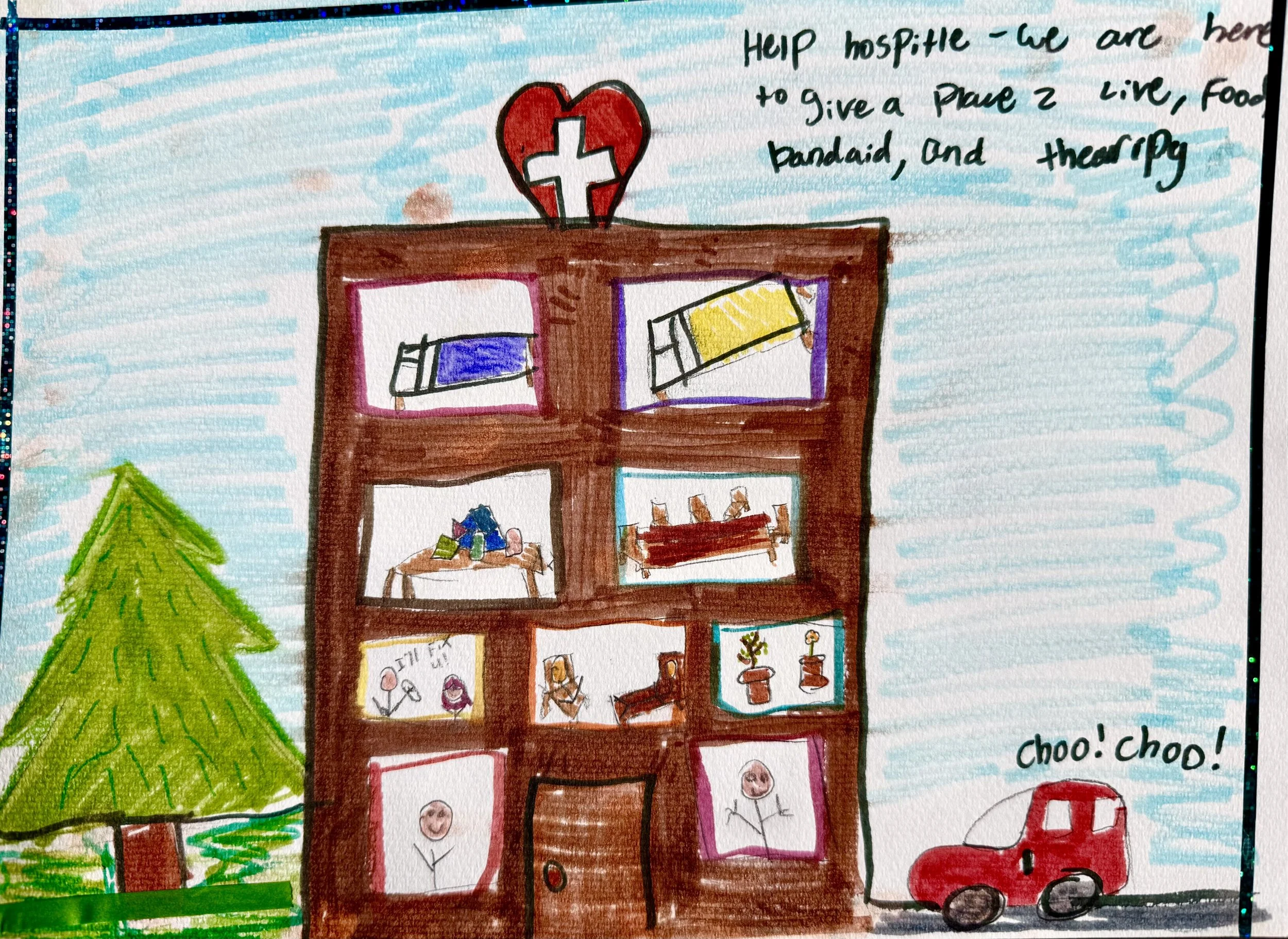
Together We Weather: Children and Adults Imagining Resilience
Ashley Stout’s research explores how children can contribute to community resilience and disaster preparedness—not simply as those who need protection, but as young people with ideas, empathy and perspectives of their own. Drawing on her Georgetown University capstone research with children and adults across Northern Colorado, she examines how imagination, art and intergenerational dialogue can reveal new ways communities might respond to and recover from disasters. Her work asks a powerful question: what might we discover if we stopped preparing children for the future of resilience and started building resilience with them today?
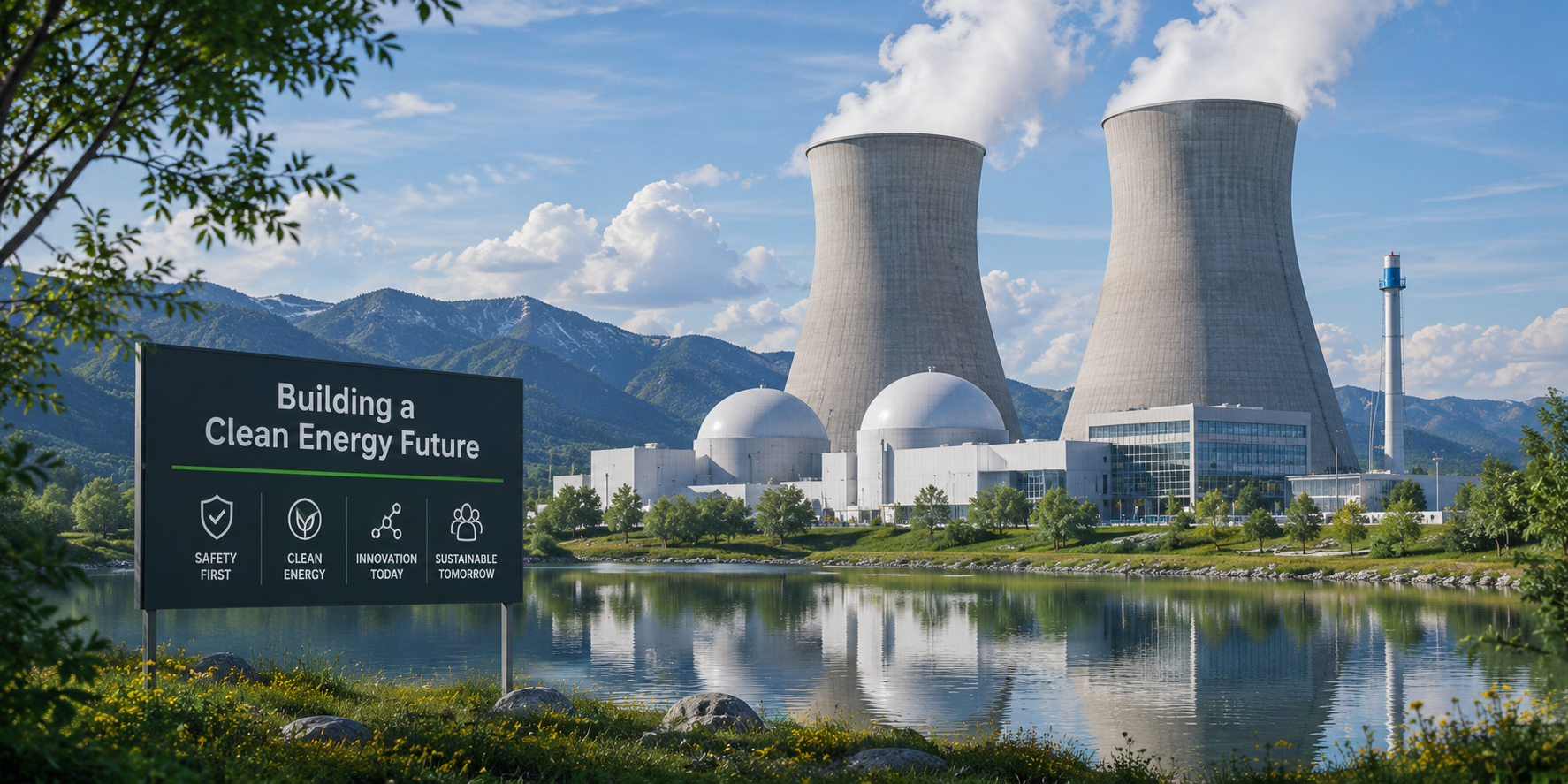
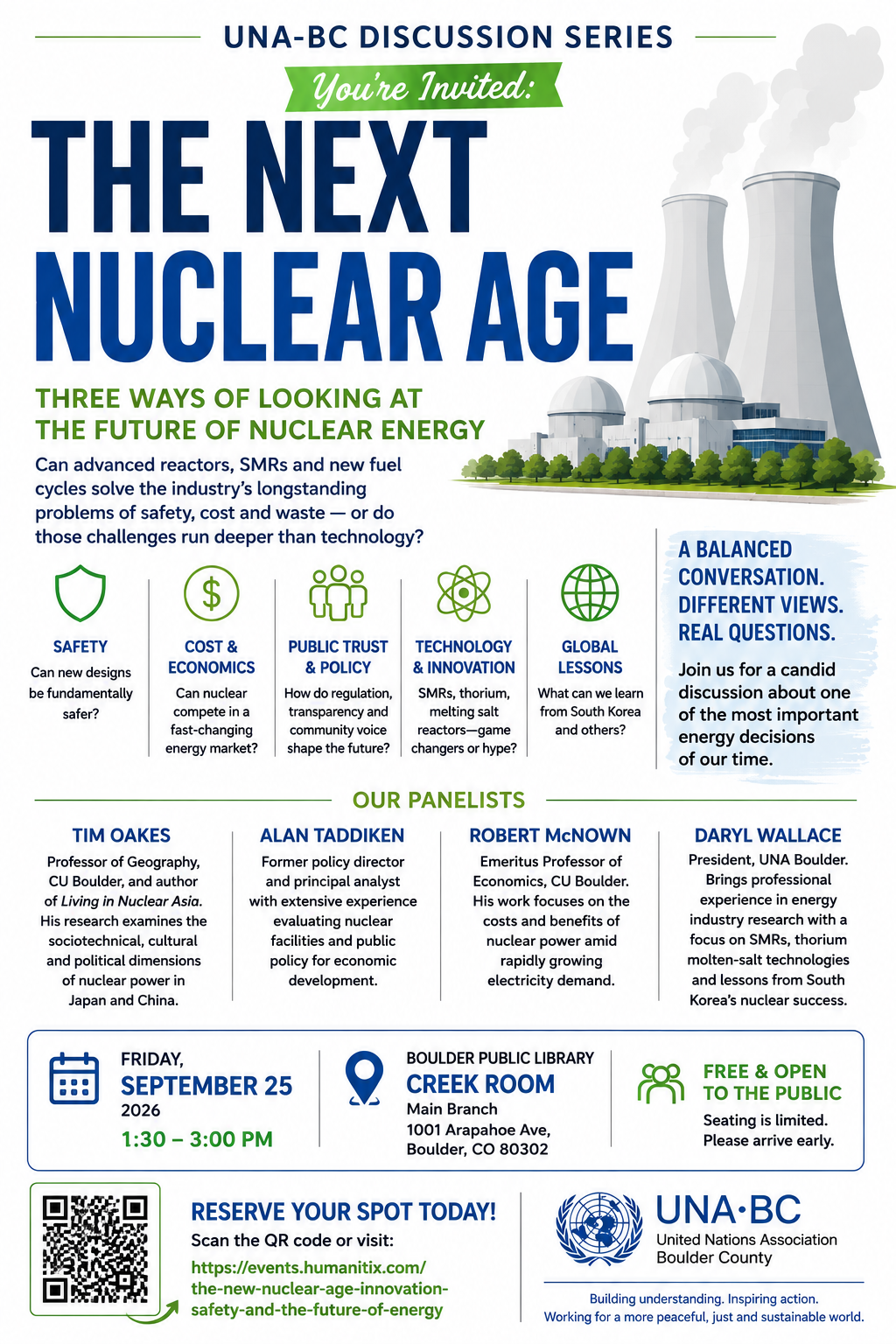
You’re Invited: The Next Nuclear Age: Four Ways of Looking at the Future of Nuclear Energy. Friday, September 25 | 1:30 – 3:00 PM - Boulder Library
Nuclear power is entering a new debate: can advanced reactors, SMRs and new fuel cycles solve the industry's longstanding problems of safety, cost and waste or do those challenges run deeper than technology? Our panel brings competing perspectives on the economics, regulation, public trust and technological promise of nuclear energy. Join us for a candid discussion about whether the next generation of nuclear power represents a genuine breakthrough or simply a new chapter in an old debate.