
Dependency Theory and Ghana's Cocoa Economy
Ghana is a nation of incredible resources coveted by the rest of the world. Its natural wealth could have made Ghana an economic power on the global stage. The effects of capitalism under colonialism set the precedent for continuous natural resource extraction. This limited Ghana’s ability to grow economically and left the nation to rely on international markets to buy its raw materials at unsustainable prices. This theory of economic dependency is evident throughout the Global South. Yet, the nation is making strides to rewrite this narrative through economic nationalism and the privatization of its cocoa and other natural resource industries.
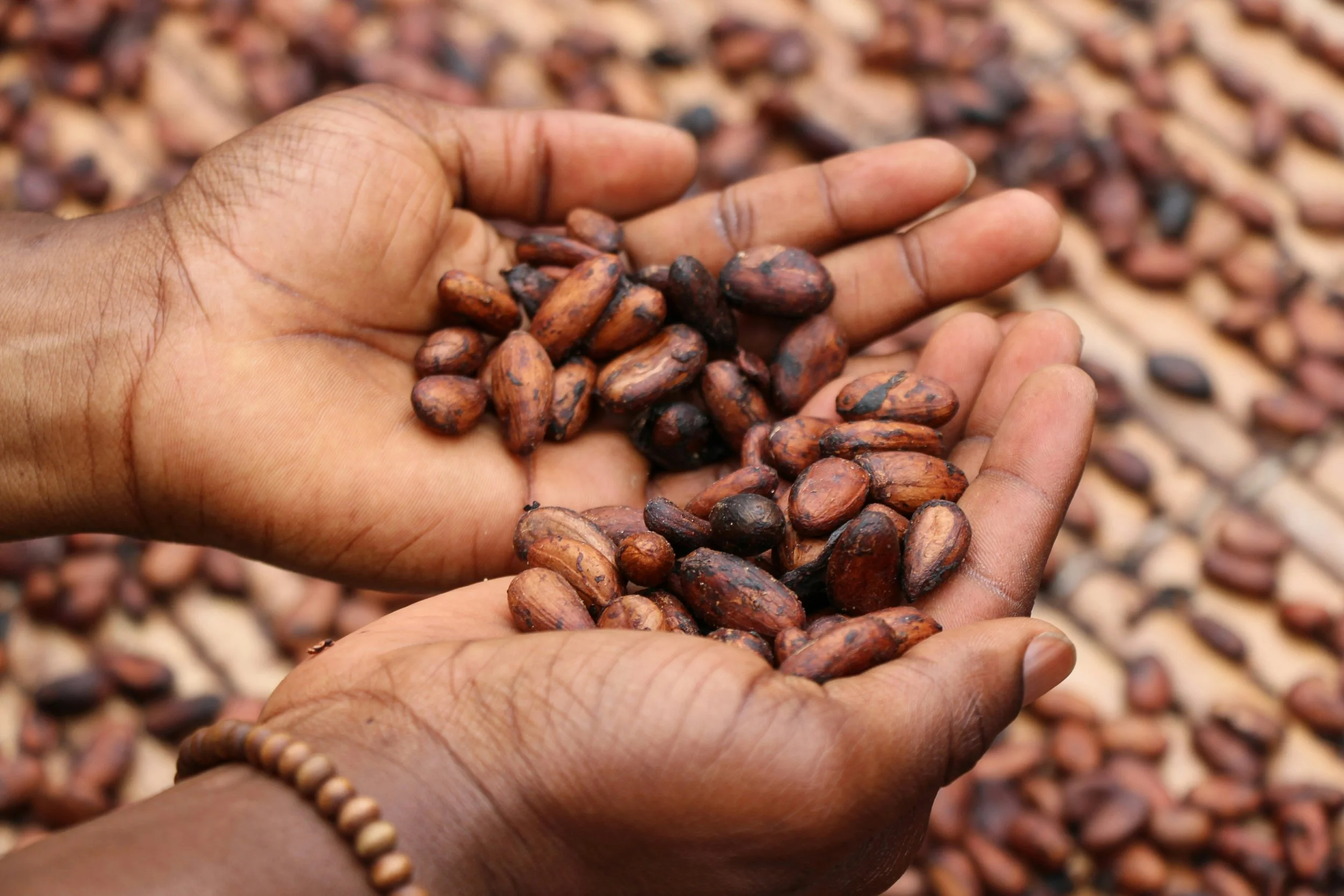
Cocoa is one of Ghana’s biggest raw material exports and is the world's second-largest cocoa producer (Olaigbe). The nation has grown cocoa for decades, and this raw material is a vital export in the Ghanaian economy. This key export has led to a multitude of challenges for the nation. Cocoa bean prices have been set too low, local farmers struggle to survive, and exporting raw beans has led to Ghana’s reliance on volatile international markets and multinational corporations. The Ghana Cocoa Board, or COCOBOD, is a government organization established to ensure farmers in Ghana receive equitable prices for their beans. This organization has proven unsuccessful, as writer Olatunji Olaigbe mentions, “According to Oxfam, up to 90% of Ghanaian cocoa farmers do not earn a living income” (Olaigbe). These prices are allegedly set to match the market, yet as supply and demand fluctuate, farmers are not being fairly accounted for. Many, if not most, farmers live below the poverty line, surviving on around $2 a day (Tannenwald). It is illegal to sell cocoa beans outside the Ghana Cocoa Board, which gives it complete control over the prices farmers must accept (Olaigbe). At the end of the value chain, Ghanaian cocoa farmers are left at the mercy of COCOBOD and the markets of multinational corporations that purchase the beans. Ghana’s challenge is its position in the supply chain: it provides the raw materials but not the final product. Olaigbe comments on this struggle: “Ghanaian farmers are unable to make significant earnings from their cocoa because they are positioned at the end of the value chain. In the cocoa industry, the most profit is made from the final product. Over 80% of Ghana’s cocoa is shipped abroad in raw form, meaning value is added in other markets” (Olaigbe). This has left Ghanaian farmers and the economy limited in economic expansion by selling beans in raw form. These cocoa beans, in their own right, should have brought the nation more prosperity than hardship, yet this position in the value chain has left Ghana economically vulnerable.
These challenges can be explained through dependency theory, the idea that the Global South exists in a state of perpetual reliance on Global North markets. Steven Schmidt describes this dynamic in Latin America: countries exported raw goods like food and minerals to the Global North, then re-imported the finished products made from those same materials, generating profit for the North while trapping the South in a cycle of trade deficits (Schmidt). This extractive relationship, rooted in colonial occupation, describes Ghana's position in the cocoa trade just as clearly as it does Latin America's: Ghana supplies the raw bean, while the value added in processing and manufacturing is captured abroad.
Ghana's path out of this pattern depends on leveraging its own competitive advantages rather than continuing to export unprocessed commodities. Gold and cocoa remain the country's top revenue sources, but Ghana added a third pillar in 2010 when it began producing oil from an offshore field (French). This diversification, combined with a deliberate strategy of economic nationalism, is reshaping how Ghana engages with global markets. That nationalism shows up in Ghana's cooperation with fellow cocoa producer Côte d'Ivoire and in efforts to process more raw material domestically (Tannenwald). The resulting alliance, CIGCI, is working toward fairer cocoa prices for West African farmers and hopes to expand by partnering with cocoa-growing nations elsewhere. Domestically, companies like Niche, a Ghanaian chocolate maker, are pushing to get locally produced chocolate onto shelves in Africa and abroad, a small but important step toward turning raw cocoa into a finished, higher-value product before it ever leaves the country.
Ghana’s valuable natural resources have been exploited for centuries, leaving the country economically disadvantaged despite its potential wealth. Cocoa, one of Ghana’s main exports, has brought economic challenges, low prices for farmers, and a position at the bottom of the value chain. Dependency theory explains this struggle, common in the Global South. However, Ghana is working to change this by leveraging new resources like oil and supporting local chocolate companies. Partnerships, such as with Côte d’Ivoire and the CIGCI organization, aim to stabilize prices for farmers. While challenges remain, Ghana is making progress towards a more independent and promising future.
Sources:
Olaigbe, Olatunji. “Ghana is the Second Largest Cocoa Producer.” Pulitzer Center, Jan 2025.
French, Howard. “Ghana’s ‘Success’ Exposes the West’s Toxic Development Model.” Foreign Policy Magazine, July 2022.
Schmidt, Steven. January 21, 2018. "Latin American Dependency Theory." Global South Studies: A Collective Publication with The Global South.
Tannenwald, Nina. “International Relations”. Political Science. Semester at Sea, March 2026
