Nepal’s Flood Disaster: The UN Response as Death Toll Surpasses 900
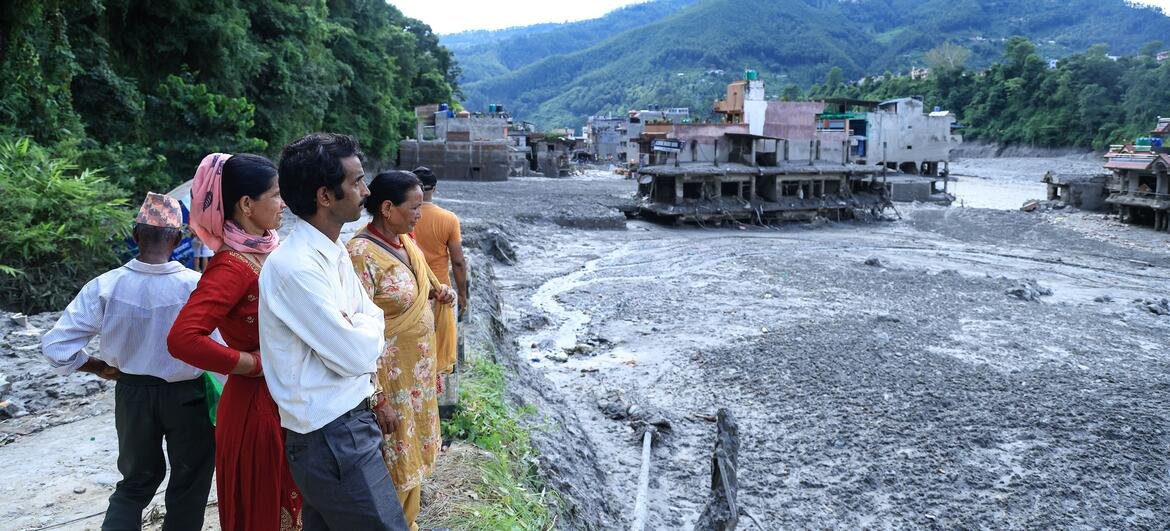
Nepal is facing one of the most devastating natural disasters in its recent history. The confirmed death toll from catastrophic flooding and landslides has risen to 903 people, with more than 4,200 still missing, as rescue teams struggle to reach communities cut off by destroyed roads and blocked highways. More than 10,000 people have already been rescued, including 252 foreign nationals, but the humanitarian emergency is only beginning. The United Nations says tens of thousands of people now require urgent assistance with food, clean water, sanitation, healthcare, shelter and protection.
The disaster was triggered by a glacier collapse and landslide along Nepal’s border with China, unleashing destructive flooding across already vulnerable communities. The scale of the tragedy has made it Nepal’s deadliest natural disaster since the devastating 2015 earthquake. The UN Office for the Coordination of Humanitarian Affairs (OCHA) has identified access as one of the greatest challenges facing relief operations. Some highways connecting Kathmandu with the hardest-hit areas remain blocked, making it difficult for humanitarian organizations to move people and supplies into isolated communities.
A UN response focused on saving lives
The United Nations is working alongside the Government of Nepal, which is leading the search-and-rescue and emergency response effort. More than 20,000 government search-and-rescue personnel have been deployed, while the UN system and humanitarian partners are supporting the national effort with food, health services, water and sanitation, child protection, nutrition and humanitarian coordination.
The World Food Programme (WFP) has already dispatched nearly 80 metric tonnes of food, reaching approximately 9,200 people with assistance expected to last 15 days. In a disaster where roads and supply routes have been severely disrupted, getting food into isolated communities is a critical part of the emergency response.
The UN Children’s Fund (UNICEF) is concentrating particularly on children and families. Therapeutic food has been moved into affected areas for approximately 500 severely malnourished children, while 15 emergency medical teams have been mobilized. UNICEF and other partners are also assessing the protection needs of children, with preliminary estimates indicating that more than 22,000 children may require protection assistance.
Perhaps most urgently, preliminary reports suggest that 107 children may have become separated from their parents or caregivers. Family tracing and reunification are therefore becoming a central part of the humanitarian response.
Water, sanitation and disease prevention
The immediate rescue operation is only one part of the challenge. Flooding can quickly become a public-health emergency when clean water systems are damaged, sanitation facilities are destroyed and displaced people are forced into overcrowded shelters.
The World Health Organization (WHO) has warned that overcrowding and disruption to water, sanitation and health services increase the risk of infectious disease outbreaks. The UN humanitarian response is therefore focusing not only on emergency medical care, but also on ensuring access to safe drinking water, sanitation and hygiene.
Around 65,000 people are estimated to require emergency water, sanitation and hygiene assistance.
This is an area where the UN's longer experience in Nepal is particularly important. UN agencies have worked with the Nepalese Government for years on disaster preparedness, early warning systems, climate resilience and emergency planning. In previous floods, the UN's Central Emergency Response Fund has supported anticipatory action—getting assistance to vulnerable communities before predicted flooding occurs rather than waiting until disaster strikes.
Children face a second emergency
For Nepal's children, the disaster does not end when the floodwaters recede.
At least 19 schools have been damaged, nine completely destroyed and eight are currently being used as shelters for displaced families. More than 10,000 school-age children are expected to need psychosocial support.
For children who have lost homes, possessions, schools—or family members—the psychological consequences could last far longer than the physical emergency.
UNICEF's previous disaster response in Nepal demonstrates the importance of this work. Following earlier floods and landslides, UNICEF established child-friendly spaces, provided psychosocial support and helped vulnerable children and families access emergency assistance. In 2024 alone, UNICEF's flood response reached more than 69,000 people, including more than 14,500 people who received mental-health and psychosocial support.
The current emergency is likely to require an even greater effort.
Hunger and nutrition are emerging threats
The destruction of homes, farmland, markets and transportation networks also threatens food security.
UN assessments indicate that approximately 2,600 children under five could require treatment for severe acute malnutrition, while around 10,500 pregnant and breastfeeding women may need nutritional assistance.
This is why the UN response extends beyond distributing emergency food. Humanitarian agencies must identify the most vulnerable households, protect children and mothers, maintain access to health services and prevent today's disaster from becoming a longer-term nutrition crisis.
A disaster linked to a changing climate
The tragedy in Nepal is also a warning about the growing risks facing mountain communities in a warming world.
Kamal Kishore, head of the UN Office for Disaster Risk Reduction (UNDRR), has emphasized the unprecedented nature of the glacier collapse and the fact that the full extent of the damage is still emerging.
UN climate chief Simon Stiell has similarly pointed to the connection between climate change and increasingly severe disasters, noting that vulnerable communities are often hit hardest.
Nepal is particularly exposed. Its geography combines the rapidly changing Himalayan environment with steep terrain, intense monsoon rainfall, glacial hazards and communities living along vulnerable river systems. The UN has increasingly emphasized that humanitarian response must therefore be paired with disaster risk reduction, early warning systems and climate adaptation.
That work was already underway before this disaster. UN agencies have supported Nepal in developing anticipatory humanitarian action, including programs designed to use weather forecasts and predictive data to deliver assistance before severe flooding occurs. Earlier UN-supported initiatives brought together agencies including WFP, UNICEF, UNFPA and UN Women with the Nepal Red Cross Society and government authorities.
Coordination may be the UN's most important role
In a disaster of this magnitude, the UN's role is not simply to deliver supplies.
It is also to bring humanitarian organizations together.
UN humanitarian partners have established a coordination hub in Nuwakot, helping organizations operating in the disaster zone share information, identify gaps and coordinate their response. This function can be especially important when roads are blocked, communications are disrupted and multiple organizations are trying to reach the same communities.
The UN has experience coordinating these kinds of responses in Nepal. Following the major floods and landslides of September 2024, the UN and Humanitarian Country Team developed a response plan targeting 193,000 of the most vulnerable people and calling for $17.5 million in immediate humanitarian funding. That response similarly prioritized food, water, sanitation, shelter, healthcare and protection, while placing particular emphasis on women, children, older people and people with disabilities.
The emergency is far from over
The rescue of more than 10,000 people is an extraordinary achievement, but the humanitarian operation is entering its next and potentially more difficult phase.
People who survived the floods still need food, clean water, medical care and safe shelter. Children need protection and psychological support. Families need to find missing relatives. Roads and bridges need to be restored. Schools need to reopen. Livelihoods need to be rebuilt.
And humanitarian organizations must reach communities that remain difficult—or currently impossible—to access.
The United Nations has repeatedly stressed that Nepal cannot simply rebuild what was lost and wait for the next disaster. The goal must be to build back safer and stronger.
For UNA Boulder and the wider UN community, Nepal's tragedy is a powerful reminder of why international cooperation matters. The United Nations cannot stop every flood or landslide. But it can help governments prepare, coordinate humanitarian organizations, mobilize resources, protect vulnerable people and bring international expertise and assistance to communities when national systems are overwhelmed.
Nepal's immediate need is for rescue and relief. Its longer-term need is for resilience.
The UN response is therefore about more than helping Nepal recover from one disaster. It is about helping a country increasingly exposed to climate-related hazards become better prepared for the next one.
The United Nations and humanitarian partners continue to work in support of the Government of Nepal and affected communities as the situation develops.