Let Youth Grow Before We Ask Them to Save the World
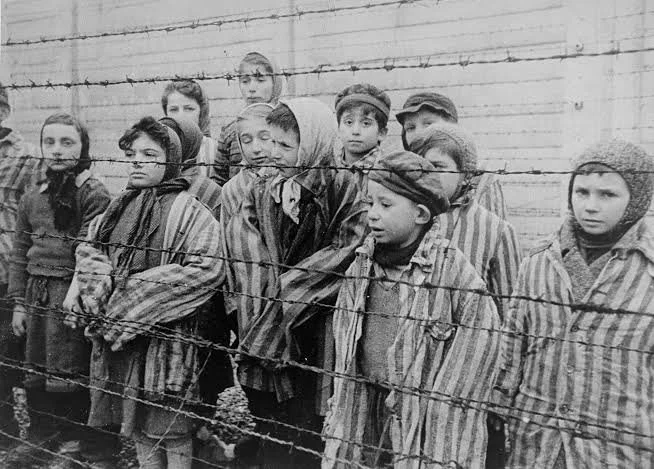
In a religious studies class, when I was first confronted with video footage of the Shoah where allied troops liberated Nazi death camps I broke down in tears. I was 14. I’d never heard of the Holocaust. WW2 for me had been a game played in the forest with friends or with plastic figures at home. After the class was dismissed, my teacher took me aside at the end of the class and asked if I was Jewish or had Jewish family. I said no and, to this day, still find the question bizarre.
There is an important difference between teaching children about the world and asking children to carry the weight of the world. You might say I took the weight of the world there and launched into a decadal pursuit of knowledge to understand the full gambit of humankind’s tragedies. It took me to study International Relations and then a career spanning the world from the shores of the Persian Gulf to Sri Lanka post-Tsunami to off-the-beaten track Africa where my mind was consistently blown by the beautiful diversity of human life, beliefs and ways of living. And certainly also frequently traumatized by injustice. I wanted to be a citizen of world, whatever that means, in a struggle to cleanse myself of any nationalist parochialism.
In my thirties I joined an advertising agency with a chance to pitch Greenpeace. My genius idea at the time was that they should find children ambassadors to champion their cause. My pre-Greta Thunburg notion was that people would listen, children could strike and the world could change for the better with the pure voice of a child waking us up from our doom. The difference between teaching children about the world and asking children to carry the weight of the world was lost on me that, now as a parent, I’m painfully conscious of. Increasingly, we all seem to be confusing the two.
Our youth are being introduced at ever younger ages to climate catastrophe, genocide, refugees, racism, war, human-rights abuses and political conflict. Much of this comes from admirable motives. We want young people to become compassionate adults. We want them to understand injustice. We want them to care about people and the world beyond their immediate home and community.
Here at our chapter of the UNA, we’ve been running the Inter-Generational United Nations for 3 years now and, in this time, I hope we’ve brought a sense of world affairs beyond the headlines to see the atrocities and conflicts in the world through the lens of constrained decision making trade offs, care with precedents and the contextualized points of view nationally coherent positions sometimes conflict with admirable motives.
At the same time at our UN, we’re foisting the troubles of the world on college students giving them the task of carrying advocacy projects to address some of the world’s problems such as human trafficking, refugee programs, the take over of AI and international development challenges. As older youth, they’re ready for this challenge.
But somewhere along the way, children’s education has become mobilization. We moved from "You should understand this" to "You should care about this in this particular way" and now to "You have a responsibility to do something about it."
That progression deserves scrutiny.
Childhood was once understood as something worth protecting
The idea that children and the youth generally should be sheltered from every unpleasant reality is neither possible nor desirable. The young have always encountered hardship, and throughout much of history many (especially from poorer backgrounds) experienced far more of it directly than most children in affluent societies do today.
But the development of modern childhood brings with it an important principle: adults should carry burdens that the youth are not yet equipped to carry themselves.
We don’t think twice on restricting children's access to graphic violence. We do not expect an eight-year-old to understand the moral compromises involved in warfare. We used to delay the introduction of death, sexuality, money, criminality and other complicated aspects of adult life.
This is not because these subjects are unimportant. It is precisely because they are important. Wisdom requires context and resilience. It requires perspective, experience, emotional regulation, an appreciation of unintended consequences and the ability to understand that two apparently contradictory propositions usually both contain truth. This is something I believe Model United Nations helps the youth address by taking on opposing sides and digging deep into the positions of competing national interests.
Those capacities develop over time. The young can understand that suffering is terrible long before they can understand why stopping suffering can itself involve difficult trade offs.
The world's hardest problems are hard because they contain moral binds
Consider refugees.
Any youth can readily understand the humanitarian proposition: a frightened family fleeing persecution deserves protection.
That may be an excellent lesson in compassion, but refugee policy also involves borders, asylum criteria, economic migration, trafficking, security, housing, public expenditure, integration, obligations toward citizens, obligations under international law and the difficult question of what happens when humanitarian systems are overwhelmed.
Understanding both sides does not diminish compassion. It makes compassion governable. That is our hope with internships.
Climate change presents a similar problem. The young can understand that human activity changes the environment and that societies should protect the planet. But climate policy involves probabilities, technological trade-offs, energy security, development, poverty, nuclear power, fossil fuels, adaptation, mitigation and questions about how costs should be distributed between rich and poor countries. Recent retiring of catastrophic climate change scenarios are an example of how the experts can get it wrong; an instance children can be blind-sided by and even resolutely refuse to accept the new ‘scientific consensus’. It turns out children raised with traumatic future scenarios are particularly susceptible to the old saying “its easier to fool someone than to convince them they have been fooled”.
Human rights become complicated when rights conflict.
War becomes complicated when peace for one population may mean vulnerability for another.
As I faced when I was 14, genocide is perhaps the most emotionally difficult of all. We should teach young people that it happened and why remembering it matters. But graphic accounts of mass murder, sexual violence, tortured children and ethnic hatred require a certain maturity and careful context. The first victim of war after all is the truth.
These are not simply collections of facts waiting to be downloaded into children.
They are some of humanity's deepest moral problems.
Knowledge is not the same thing as activism
There is another distinction worth defending; education should give children the intellectual equipment with which they might eventually disagree with us. Activism necessarily begins somewhere else. An activist has reached a conclusion and seeks change. There is nothing inherently wrong with that. Democratic societies need activists but education ought to precede activism.
Teach a teenager how the climate works. Teach the scientific evidence. Then teach what scientists disagree about. Teach mitigation and adaptation. Teach the economics of energy. Let them debate Net Zero, carbon taxes, nuclear power, renewables and development.
Teach the Refugee Convention. Then distinguish refugees, asylum seekers, internally displaced people and economic migrants. Examine cases where asylum saved lives and cases where migration systems became politically unsustainable.
Teach the Holocaust, Rwanda, Bosnia, Cambodia and the Armenian genocide. Then ask the difficult questions: Why did ordinary people participate? Why did international institutions fail? When should outsiders intervene? When has intervention made matters worse?
That is education.
If, having wrestled seriously with those questions, an eighteen-year-old decides to become an activist, that conviction belongs to them. The line between too young and old enough is blurred here and, as a parent or teacher, needs particular care.
Fear is a poor substitute for understanding
There is also a psychological reason for caution.
We should be careful when teaching climate change, human rights or war in the interests of preventing deterioration in adolescent mental health. Youth mental health has many interacting influences, including family circumstances, social media, bullying, economic insecurity, the pandemic and numerous individual factors. The more recent deterioration itself is difficult to ignore.
CDC data for American high-school students found that in 2023 approximately 40% reported persistent sadness or hopelessness, 20% seriously considered attempting suicide, and 9% reported attempting suicide. Among Americans aged 10–24, the suicide rate increased 62% between 2007 and 2021, from 6.8 to 11.0 deaths per 100,000.
That begs the question whether political education may be part of the cause for the increase. It should make adults extraordinarily careful about adding feelings of existential responsibility to an already distressed generation.
Climate anxiety illustrates the problem particularly clearly.
A major international study of 10,000 people aged 16–25 found that nearly 60% were very or extremely worried about climate change; 45% said their feelings about climate change negatively affected their daily lives, while three-quarters regarded the future as frightening. UNICEF now explicitly discusses eco-anxiety and describes young people experiencing sadness, fear, anger, powerlessness, helplessness and guilt around environmental issues.
Those findings should not be interpreted as an argument for concealing climate science. They should, however, cause us to question the wisdom of telling children, implicitly or explicitly, "Your future is being destroyed, adults have failed you, and it is now your generation's responsibility to stop it."
That is an extraordinary psychological burden to place upon someone who cannot vote, plan an electricity grid, negotiate an international treaty or determine national energy policy. The genius of simulations like Model United Nations is that it teaches the trade offs inherent in national interest colliding noble aspirations of international community.
The same principle applies to war
The modern information environment makes this problem considerably harder.
A child learning about a distant war fifty years ago might have encountered a newspaper photograph and a conversation at the dinner table. Today's child can encounter an endless stream of bombed buildings, frightened civilians, mutilated bodies, political accusations and algorithmically amplified outrage.
Children do not necessarily experience that information as adults do.
Experts therefore recommend age-appropriate conversations and limiting unnecessary exposure to distressing coverage. The American Psychological Association notes that difficult events should be discussed in ways appropriate to children's developmental level, while excessive exposure to disturbing news can increase anxiety and fear. Specialists discussing children's exposure to war similarly emphasize that younger children may struggle even to distinguish televised danger from danger occurring near them.
There is an important lesson there.
More awareness is not automatically better awareness.
Give children agency over their own convictions
Perhaps the most troubling aspect of childhood activism is something subtler.
A ten-year-old holding a political placard may sincerely believe every word written upon it. But the child's worldview is overwhelmingly constructed by adults: parents, teachers, institutions, celebrities, social media and peers.
We therefore ought to be cautious about treating children's political participation as though it carried the same independence of judgment as an adult's.
Children trust us.
That creates an ethical responsibility not to exploit that trust, even for causes we consider unquestionably righteous.
And history should make us particularly sensitive to this. Across ideologies, religions and political systems, adults have repeatedly discovered the tremendous symbolic power of children. A child advocating a cause appears innocent, morally uncomplicated and representative of the future. Exactly what I was aiming with Greenpeace. But that is precisely why adults should hesitate before using children that way.
The test is uncomfortable but useful:
Would we still consider it admirable for schools to encourage children's political activism if the children were being mobilized for a cause with which we profoundly disagreed?
If the answer changes according to the cause, then we may not really be defending children's activism. We may be defending children's participation in our activism.
Childhood does not need to be politically empty
None of this means raising ignorant or indifferent children. Quite the opposite. Teach children compassion. Teach them that refugees are human beings rather than statistics. Teach them that war causes terrible suffering. Teach them why genocide must be remembered. Teach them to respect human dignity. Teach them about the natural world and humanity's responsibility toward it.
But also teach uncertainty. Teach them to ask, "How do we know?" Teach them the difference between evidence and advocacy. Teach them that good intentions can produce bad consequences. Teach them that intelligent and decent people can examine the same problem and reach different conclusions. Teach them to recognize propaganda including propaganda supporting causes they personally admire.
And perhaps most importantly, allow them the freedom not to have an opinion yet. This is no moral failure in a twelve-year-old. Being more interested in football, dinosaurs, music, horses, computer games or friends than in Gaza, Ukraine, Sudan or atmospheric carbon concentrations is perfectly natural.
Childhood is not wasted time before political consciousness arrives. Childhood is where the psychological foundations are constructed that eventually make independent judgment possible.
We need wise adults more than young activists
The purpose of education should therefore not be to manufacture miniature campaigners for today's causes. It should be to produce tomorrow's thoughtful citizens.
A successful education about climate change is not one in which every student joins a climate march. It is one in which students eventually understand the science well enough to evaluate competing claims about climate policy.
Successful human-rights education does not require children to become human-rights activists. It should produce adults capable of defending human dignity while understanding how rights, laws and responsibilities interact.
Successful education about refugees should create compassion without preventing discussion about borders.
Successful education about war should create revulsion toward unnecessary violence without pretending that every conflict offers an uncomplicated choice between war and peace.
And successful education about genocide should ensure that children eventually understand humanity's capacity for extraordinary cruelty without prematurely convincing them that the world around them is irredeemably cruel.
Our children will inherit the world's problems soon enough.
We should prepare them for that inheritance.
But preparation is not the same as transferring the burden early.
There will be plenty of time for them to campaign, protest, vote, organize, argue and choose causes. Childhood should first give them something activism cannot: time to grow, permission to question, freedom to change their minds, and the emotional security from which independent thought becomes possible.
Perhaps our responsibility is not to raise children who will fight for the causes we have chosen but it is to raise children who, when they become adults, possess the wisdom and freedom to decide for themselves which causes are worth fighting for—and what the consequences of that fight might be.
For me, you might say I have lived a life in the shell shock of understanding the Shoah too late and too early. Too late for WW2 was something I’d played as a child unaware of the darker realities. Too early as to traumatize me for the depths of evil humanity could descend. I carried the scar tissue to the point of championing children for taking on climate change’s burdens of world.
Today, as a parent, I’m careful to balance the current excitement for heroism my 12 year old son has for WW2 with the dark realities behind the conflict. Pictures and footage of the Shoah can wait. Responsibility for climate change can certainly wait as I try to balance his teachers foisting of the uncertainty for the future upon his shoulders against the proven adaptability of humankind. As he ages, he can grapple with the complexities of the world without the stress of being propelled into the anxiety levels of a Great Thunberg. He is not required to have an opinion yet and, as he continues to develop, I hope through educational modes like Model United Nations, he begins to understand the complexities of the world within the constraints of reality. And maybe interning with the UNA one day will help him adjust to some of the darker aspects of world affairs. Time will tell.