Youth Voices at the UN: Reflections on AI, Equity, and Global Inclusion
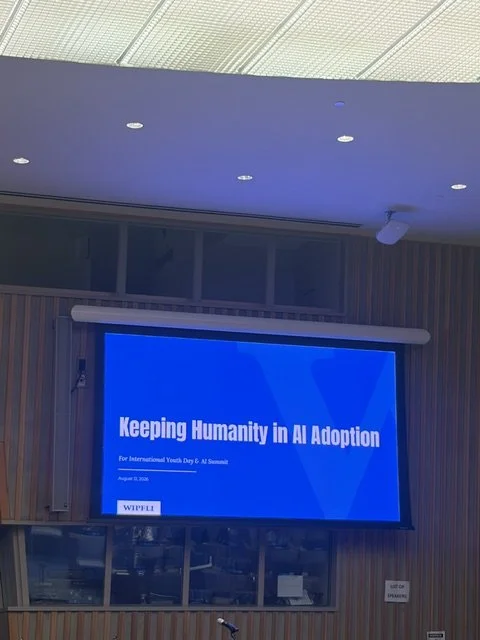
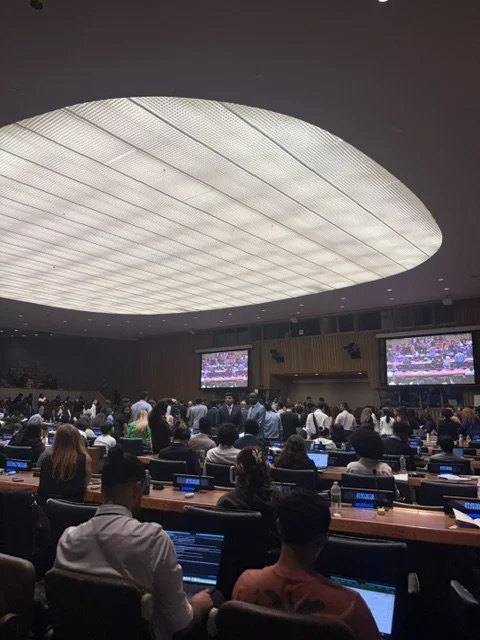
This past week, I had the honor of attending the Youth and AI Summit at the United Nations Headquarters in New York City. Organized by the International Organization of Youth and supported by the Permanent Mission of The Bahamas to the United Nations. This continues to be one of the first collaborations with young people in which they are directly consulted and involved in important discussions, such as AI policy and governance. This all-day summit brought together over 700 individuals from around the globe, along with a panel of diplomats and UN officials. Delegations from states such as Dominica, Pakistan, and Tonga also supported the program. Celebrating International Youth Day, the goal of this summit was to create a youth-led declaration on AI Policy and Governance, which will be directly used and integrated into the ongoing UN Online Digital Compact.
It was my first time attending a Youth-led summit at the UN, and I was inspired by their focus on hearing students and young advocates from around the world share their takes on this growing technology. Key themes from this talk included governance and equity, eliminating biases, ensuring cultural connection, and the overall importance of youth involvement in UN discussions.
AI Governance, Global Equity, and Inclusion:
One of the most critical aspects of AI regulation is ensuring that decision-making power is not concentrated in a handful of corporations and governments, but is shaped by global, multilateral collaboration. Without inclusive, international cooperation, AI risks becoming a tool for a select few, widening the technology and information gap between nations and communities. Weaponized AI, surveillance abuses, deepfakes, and copyright violations can accelerate existing inequalities and threaten human rights.
AI must be treated as a global public good, supporting digital inclusion and equal opportunity for all. For example, UNESCO Youth Leader Lamarzala Gran shared how, in some countries, girls who are barred from formal education such as in Afghanistan, use AI to learn, sometimes sharing a single phone among many. Ensuring equal access and representation, especially for the Global South, is crucial. Setting international standards and building global governance requires continuous dialogue between governments, stakeholders, and youth.
To close the AI trust and access gaps, there must be meaningful participation from underrepresented regions and direct involvement of young people. Governor Kahn of Pakistan, for example, set the ambitious goal of training one million AI professionals by 2030 to increase representation from the Global South.
AI, Human Connection, and Culture:
A recurring theme throughout the summit was the need for AI to preserve cultural stories and ensure technology strengthens, not erases, human connection. Participants stressed the importance of humanizing AI and ensuring that it remains a tool guided by lived experience. As several speakers repeated, AI cannot fully understand or replicate the nuance of human trust, cultural heritage, or personal experience.
AI’s current development is concentrated in WEIRD societies (Western, Educated, Industrialized, Rich, and Democratic), which means its learning is shaped by limited perspectives and risks perpetuating biases. As Jiyoon Kim, a Data & Innovation Consultant at the UN, pointed out, this concentration of use and development can exclude other cultures. Addressing and eliminating these biases is essential; technology must include diverse perspectives and actively work to celebrate and preserve unique cultures and lived histories.
Moreover, the summit highlighted that while AI can accelerate innovation, it cannot replace empathy, the role of communities, or the importance of direct human interaction. Real safety, especially in mental health, comes from transparent, trustworthy systems. Accessibility does not always equal safety, especially in sensitive areas like mental health, where deepfakes, misuse of data, and copyright issues raise new risks. Strict safeguards, human oversight, and ongoing efforts to address weaponized AI and surveillance are critical for protecting human rights and ensuring AI serves everyone justly.