
Across Borders, Across Species: The Fight to Protect Wildlife
While traveling through Kenya, I had the opportunity to see African savanna elephants living in a protected habitat. In October 2026, countries are scheduled to meet in Yerevan, Armenia, for the UN Biodiversity Conference, COP17. Countries will review their progress toward implementing the Kunming-Montreal Global Biodiversity Framework. This allows the international community to look not only at what countries have promised to protect, but at the progress they have actually made.
Watching these massive animals move freely through the landscape was magnificent. Around the protected area, I saw guards and gated fences separating the wildlife inside from the outside world. At first, I saw those protections as completely positive. They gave elephants and other wildlife a place where they could live more safely. But they also made me think about what protecting wildlife actually requires.
Through the Kunming-Montreal Global Biodiversity Framework, countries have committed to conserving 30 percent of the world's land and waters by 2030. Protecting land, however, is not as simple as putting up a fence. People live around these areas, depend on natural resources, raise livestock, farm, and build their lives alongside wildlife. Conservation has to consider them too.
We have already seen the consequences when it does not. According to the Kellermann Foundation, the Batwa people lived in the area that is now the Bwindi Impenetrable Forest in Uganda for generations. In 1991, they were displaced from their native forest without receiving land or compensation. Today, organizations including the Kellermann Foundation work with Batwa communities on education, healthcare, and economic opportunities.
The Batwa experience shows why protecting land is not enough. Conservation policies also have to protect the rights and livelihoods of the people who depend on that land.
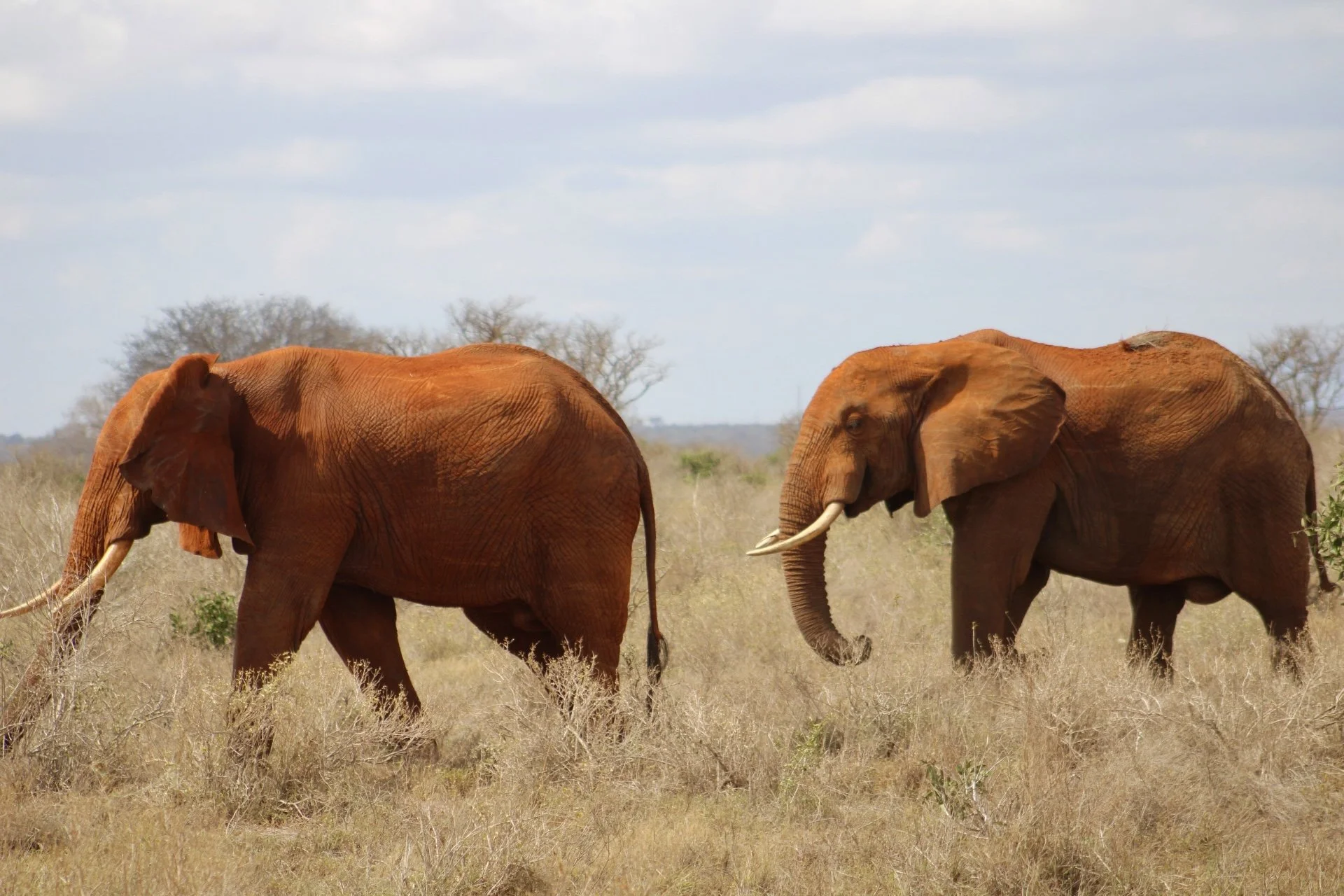
Elephants show how difficult that balance can be. African savanna elephants are endangered, threatened by poaching and habitat loss. As farms, roads, and communities expand into elephant habitats, people and elephants come into closer contact. An elephant searching for food can destroy crops that a family depends on, making conservation a direct issue for people's livelihoods.
Losing elephants would also affect much more than the elephants themselves. Elephants shape their ecosystems by spreading seeds, creating pathways, and changing vegetation. Protecting elephants therefore protects more than one species. It helps protect the ecosystems they help create and maintain.
Thousands of miles away, Colorado is facing its own version of this challenge with gray wolves.
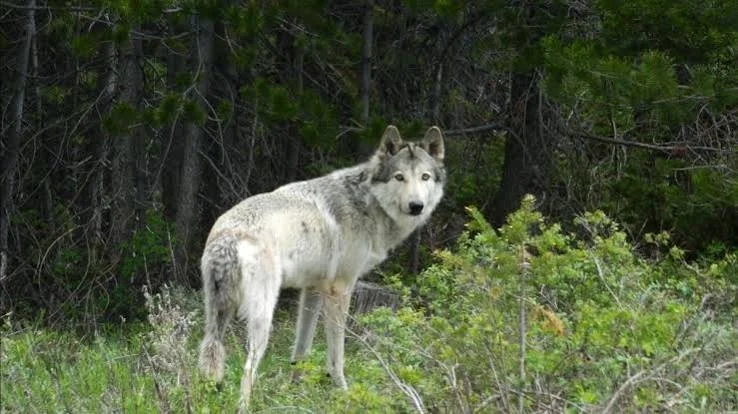
Wolves once lived throughout Colorado before being eradicated from the state by the 1940s. In 2020, Colorado voters approved their restoration, and today we are watching a major predator return to an ecosystem after being gone for decades.
Yellowstone shows why that return matters. Wolves were reintroduced there in 1995, restoring a major predator to the ecosystem and contributing to a trophic cascade. Wolves prey on elk and affect how elk use the landscape. Reduced browsing pressure has helped willow stands recover in parts of Yellowstone, demonstrating how the return of a predator can create changes that reach beyond the predator itself.
This raises the question for Colorado: what will the return of wolves mean for our ecosystems?
Colorado is not Yellowstone, and we should not expect the two ecosystems to respond in exactly the same way. But Colorado now has the opportunity to study what happens when a predator that humans removed returns decades later. Colorado Parks and Wildlife released its latest annual wolf report in May 2026, meaning this is not a conservation story from the past. It is happening right now.
Organizations in Colorado are also working on the challenge of coexistence. The Colorado Wolf and Wildlife Center in Divide focuses on education and conservation and supports efforts to reduce conflict between wolves and livestock. Nonlethal methods include range riders, fladry, livestock guardian dogs, and improved fencing.
That work matters because bringing wolves back is not as simple as releasing them into Colorado. Wolves prey on livestock, creating financial consequences for ranchers. Colorado can protect wolves while compensating ranchers for livestock losses, using nonlethal methods to reduce conflicts, monitoring wolf populations, and giving rural communities a voice in the decisions being made.
It does not have to be elephants versus farmers or wolves versus ranchers. Conservation should protect ecosystems without forcing the people living closest to wildlife to carry the greatest costs.
That is also one of the questions countries will have to confront as they work toward their international biodiversity commitments. Protecting 30 percent of the world's land and waters is an ambitious goal, but the number alone will not define success.
Successful conservation cannot only be measured by how many animals we save or how much land we protect. We also have to ask what happens to an ecosystem when a species returns, who benefits from conservation, who carries its costs, and whether the people living closest to wildlife have a voice.
Seeing elephants living freely in Kenya showed me what conservation can preserve. The return of wolves to Colorado gives us the opportunity to see what conservation can restore. The challenge is making sure we protect both the wildlife we could lose and the people who share the land with them.
To Learn More and Take Action:
United Nations Sustainable Development Goal 15
Learn about international efforts to protect biodiversity and prevent species extinction.
https://globalgoals.org/goals/15-life-on-land/
Colorado Parks and Wildlife
Follow Colorado's gray wolf restoration and efforts to reduce conflict between wolves and livestock.
Convention on International Trade in Endangered Species
Learn how countries cooperate to combat illegal wildlife trade.
https://cites.org/eng/disc/text.php
World Wildlife Fund (WWF)
Explore endangered species, conservation projects, and ways to support wildlife protection.
https://www.worldwildlife.org/
Sources
United Nations Environment Programme (UNEP). Kunming-Montreal Global Biodiversity Framework.
https://www.unep.org/resources/kunming-montreal-global-biodiversity-framework
Convention on Biological Diversity (CBD). UN Biodiversity Conference (COP17).
https://sdg.iisd.org/events/2026-un-biodiversity-conference-cbd-cop-17/
International Union for Conservation of Nature (IUCN). African Elephant Species and the IUCN Red List.
https://iucn.org/ranger-effect
Convention on International Trade in Endangered Species of Wild Fauna and Flora (CITES). African Elephant. https://cites.org/eng/prog/terrestrial_fauna/elephants
U.S. National Park Service. Yellowstone National Park: Trophic Cascades and Wolf Restoration.
https://www.nps.gov/yell/learn/management/wolf.htm
Colorado Parks and Wildlife. Gray Wolf Restoration and Management.
https://cpw.state.co.us/sites/default/files/2024-08/2023-Final-CO-Wolf-Plan.pdf
Colorado Wolf and Wildlife Center. Wolf Education and Conservation.
https://www.wolfeducation.org/
Kellermann Foundation. Batwa Community Development.
https://www.kellermannfoundation.org/our-work/batwa-community-development
