
Bringing Clean Water to Kagola, Kenya: A Community Project in Development
By George Okello: An initial report on the need for reliable drinking water in Kagola, Siaya County — and an invitation to help find a sustainable solution.
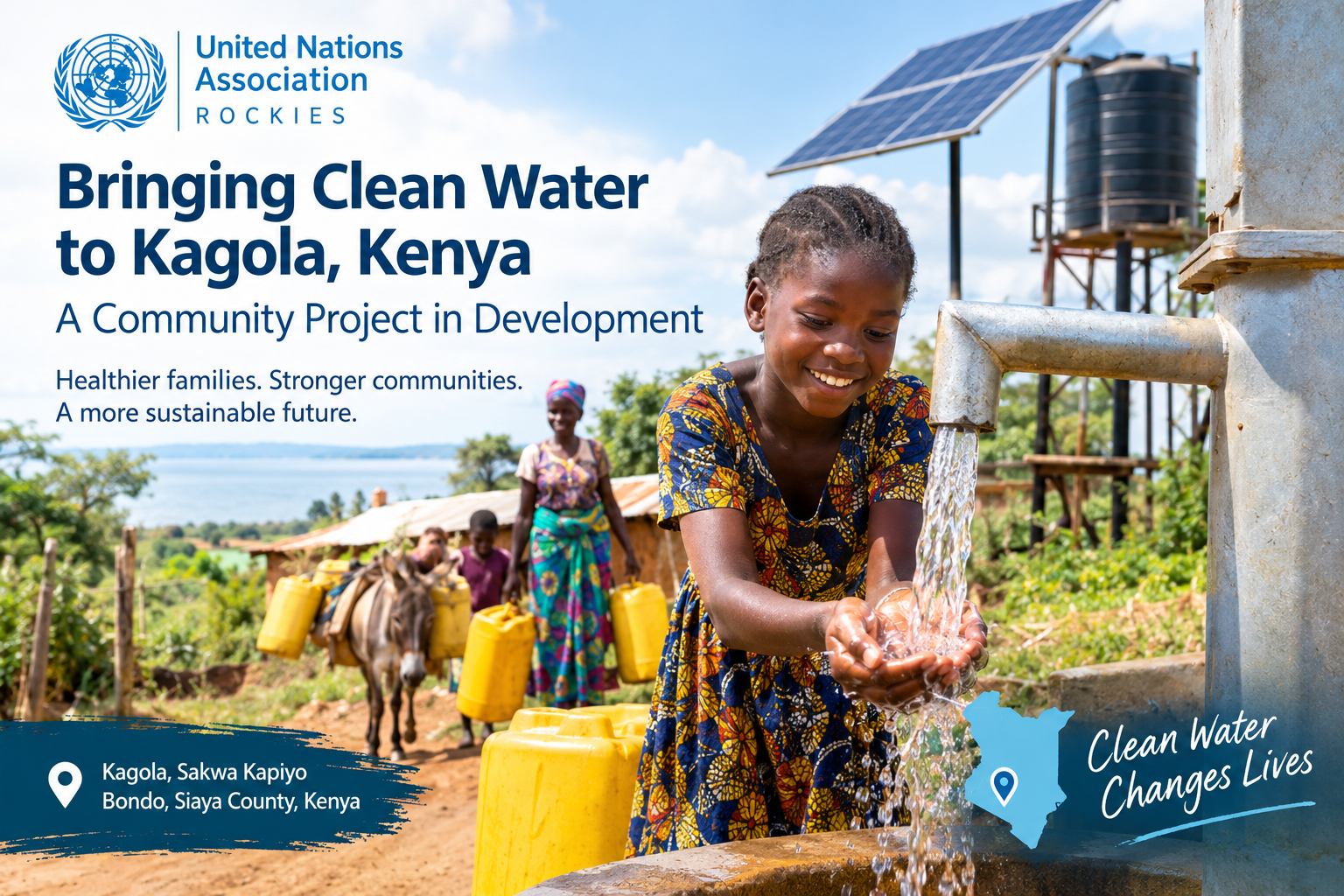
A community in need of reliable water
In Kagola, within the Sakwa Kapiyo area of Bondo, Siaya County, Kenya, access to fresh drinking water remains a daily challenge for local residents.
According to George Okello, who is helping develop a proposal to address the problem, residents currently rely on transporting water by donkey cart, bicycle and even by hand. Collecting water this way takes time, effort and money, placing a particular burden on households that must secure water every day for drinking, cooking, washing and other essential needs.
Reliable access to safe water is fundamental to public health, education, economic opportunity and human dignity. When obtaining water requires considerable effort, the consequences can extend throughout family and community life.
For Kagola, the question is straightforward: How can we help the community gain dependable access to safe drinking water through a solution that is affordable, technically sound and sustainable over the long term?
Exploring a potential solution
George has begun investigating how a water project could be delivered and has approached WaterAid to explore potential support. Although WaterAid indicated that the concept was worthwhile, it was unable to take on a new project at this time because of its existing commitments.
The search for potential partners is continuing.
An initial contractor quotation has also been obtained for a proposed water installation serving residents of Kagola. The preliminary figures shared to date indicate a combined estimate of approximately US$58,133.66, covering two bills.
This is an early costing, not a confirmed final project budget. The detailed scope, technical specifications, individual cost items and full implications of both bills still need to be reviewed. Before any fundraising campaign begins, the project team will need to establish exactly what is included, whether all proposed work is necessary, and whether alternative approaches could provide better value.
One option worth investigating is a borehole or deep well, potentially supported by solar-powered pumping and suitable water storage and distribution infrastructure. Such a system could reduce the effort required to collect water and provide a more reliable local supply.
However, the right solution should be determined by local conditions rather than assumed in advance. Groundwater availability, drilling depth, water quality, community demand, installation costs and ongoing maintenance will all influence the choice.
What would a successful water project deliver?
The objective is not simply to drill a hole in the ground. It is to establish a reliable community water service that continues to work long after the initial installation.
Depending on the findings of the technical assessment, a project could include:
Water source development: A hydrogeological assessment and, if appropriate, drilling and construction of a borehole.
Pumping and power: A suitable pump, potentially powered by solar energy, to reduce reliance on costly electricity or fuel.
Storage and access: Water storage tanks and appropriately located collection points, with distribution infrastructure where feasible.
Water safety: Testing to establish that the water is safe to drink, with treatment included if required.
Community management: An agreed system for operating the facility, maintaining equipment, managing any user fees and paying for repairs.
Long-term monitoring: A plan to check water quality, equipment performance and the reliability of the supply.
The design should reflect the needs of the people who will use it. Residents need to be involved in deciding where water points should be located, how the service will be managed and how access will remain fair and affordable.
Finding the right partners
No single organisation needs to solve this challenge alone. The project could benefit from collaboration between local residents, Kenyan water specialists, experienced charitable organisations, drilling contractors, technical advisers and international supporters.
Several organisations are potential starting points for outreach, subject to confirming their current programmes, geographic coverage and willingness to consider new projects:
Water is Life Kenya — a potential contact for experience in rural water access, boreholes and community water management.
Drilling For Life — a potential contact for borehole development and solar-powered water systems.
WellBoring — an organisation to approach regarding rural community and school water projects.
Well Aware — a potential source of expertise in sustainable water systems and community ownership.
The Water Project — a possible partner for exploring community-managed water solutions.
Omeriye Foundation — another organisation to contact regarding water infrastructure projects in Kenya.
Helping Hand for Relief and Development (HHRD) — a potential contact for water access programmes and borehole installations.
This list is intended to guide initial enquiries, not to suggest that any organisation has agreed to participate or is currently accepting this proposal. Other Kenyan organisations, county water authorities, local engineering firms and community-based groups may also be well placed to help.
Local expertise will be especially important. The most appropriate solution may already be familiar to organisations working in Siaya County and the wider Lake Victoria region.
Is the current quotation the best approach?
The initial estimate of approximately US$58,134 provides a starting point for understanding the potential scale of the investment. It also raises an important question: could the same outcome be achieved more economically, or could a different design offer greater long-term value?
Before committing to a particular approach, the project team should compare several options.
Option 1: Develop a new borehole.
Commission a technical assessment, establish the likely drilling depth and water yield, and obtain comparable quotations from qualified contractors. The assessment should identify the full cost of drilling, pumping, storage, water testing and installation.
Option 2: Explore a solar-powered water system.
Determine whether solar pumping could reduce operating costs and improve reliability. The assessment should include pump capacity, storage requirements, security and maintenance.
Option 3: Investigate existing water sources.
Establish whether a nearby existing borehole, piped supply or other source could be rehabilitated, extended or shared at lower cost than developing an entirely new source.
Option 4: Consider rainwater harvesting or other complementary solutions.
Depending on rainfall, roof area, storage capacity and local conditions, rainwater harvesting may provide a useful supplementary supply. It should not be treated as a replacement for a reliable year-round source without evidence that it can meet demand.
Option 5: Work through an established water organisation.
An experienced organisation may be able to provide technical oversight, procurement support, an established delivery model or access to funding. This could improve the project's value and sustainability, even if it means adapting the original proposal.
These options are not mutually exclusive. A borehole, for example, could be combined with solar pumping, storage and community collection points. The priority is to identify a solution that meets the community's needs at a defensible capital cost and an affordable ongoing cost.
What needs to happen next?
The project is at a preliminary stage. The next phase is about turning a compelling community need into a credible, independently reviewed and fundable proposal.
The immediate priorities are:
Document the need. Establish the number of households and people who would benefit, the current water sources, the distances and costs involved in collecting water, and any known water-quality or seasonal supply issues.
Review the quotation. Obtain both bills and a clear breakdown of the proposed work, including quantities, specifications, labour, equipment, transport, taxes and any exclusions. Confirm the currency, the basis for the US-dollar conversion and whether the total includes all costs needed to deliver an operational system.
Seek comparable quotations. Approach multiple qualified Kenyan contractors with the same written specification so their prices can be compared fairly.
Obtain technical advice. Investigate groundwater conditions, likely drilling depth, expected yield, water quality and the suitability of alternative sources before selecting a design.
Consult the community. Work with residents and local leaders to agree on demand, water-point locations, governance, access, maintenance and affordability.
Identify an implementation partner. Contact experienced water organisations, charities, county-level stakeholders and technical specialists to determine who could assess, deliver or oversee the project.
Develop a transparent funding plan. Once the scope and costs have been independently reviewed, establish the fundraising target, milestones, procurement arrangements, reporting process and plan for maintaining the system.
Only when these steps are sufficiently advanced should a public fundraising campaign set a definitive target and invite contributions.
An invitation to help
We believe this initiative deserves further investigation. Reliable access to drinking water can make a meaningful difference to a community, but delivering lasting change requires more than good intentions. It requires local participation, sound engineering, transparent costs and a practical plan for keeping the system operational.
We are inviting people with relevant experience to help shape the next stage.
Do you have experience in rural water supply, borehole drilling, hydrogeology, solar pumping, community development or international development funding? We would welcome your advice on the technical options, organisations to approach, contractors to consider and potential sources of support.
We are also interested in hearing from charities and organisations already working on water access in Kenya that may be able to offer guidance, technical assistance or a route to implementation.
At this stage, we are not asking supporters to fund an unverified quotation. We are asking for help to establish what Kagola needs, what the best solution would cost, and how the community can secure a reliable water supply for years to come.
If the feasibility work supports a viable proposal, we hope to develop a transparent fundraising campaign that connects supporters with a clearly defined project and measurable outcomes.
Clean water should not depend on how far a family can travel or how much effort it can expend to bring water home. With the right partners and a carefully developed plan, we hope to help Kagola move towards a better and more sustainable future.
Project contact: George Okello, working with Daryl Wallace (president [@] unaboulder.org) and supporters of the United Nations Association in Colorado. The project remains under investigation; no implementing partner or final project budget has yet been confirmed.
