The UN as a Force Multiplier for American Interests
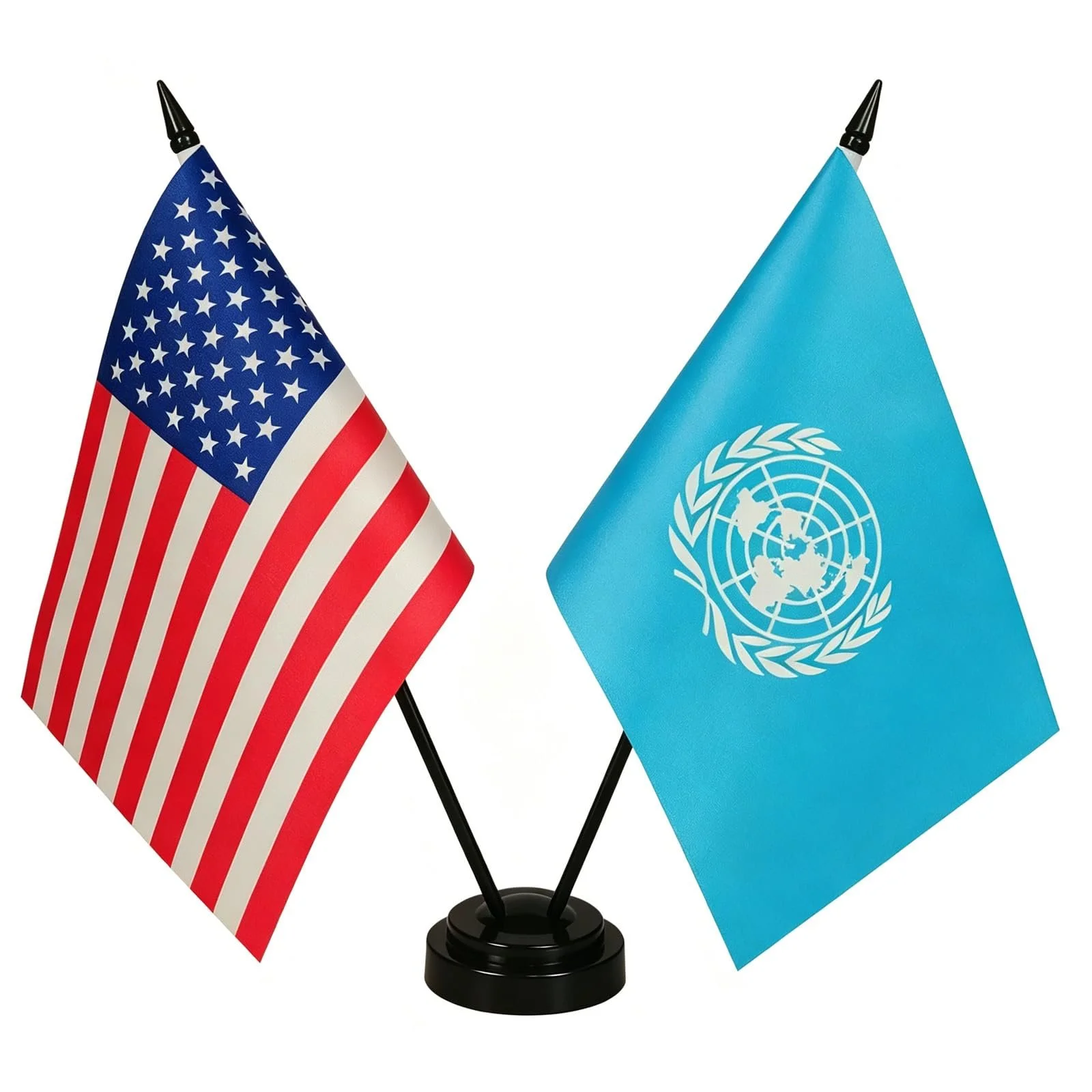
It's easy to think of UN dues as money that leaves the country. The reality is closer to the opposite: U.S. investment in the United Nations is one of the most cost-effective tools in the American foreign policy toolkit, because it leverages resources from 192 other member states to advance goals the United States would otherwise have to fund - and staff, and defend - entirely on its own.
The clearest evidence is peacekeeping. According to the U.S. Government Accountability Office, UN peacekeeping missions cost American taxpayers roughly one-eighth as much as deploying a comparable U.S. military force to do the same job. The U.S. pays its share of a shared peacekeeping bill; it does not pay to unilaterally deploy, house, supply, and rotate American troops in every conflict zone where stability serves U.S. interests. That is a force multiplier in the most literal sense; American dollars doing several nations' worth of work.
We're also seeing that logic reflected in recent policy. There has been a real shift in tone in Washington, including among Republican leadership, recognizing that the UN advances concrete U.S. strategic objectives. The administration has leaned on UN mechanisms to help stabilize crises in Haiti and the Democratic Republic of Congo, and has backed the Secretary-General's "UN80" reform initiative aimed at streamlining the institution. That shift showed up in the budget process, too: despite an initial administration proposal to eliminate UN-related funding entirely, Congress restored core U.S. dues to the UN regular budget and peacekeeping operations in the FY2026 appropriations bill signed into law this year, even as overall international-affairs funding came in lower than prior years. Lawmakers across the aisle made the judgment that walking away from these treaty obligations would cost America more in influence and stability than it would save in dollars.
That's the case for the UN as America's best hope for tackling problems no single nation can solve alone: pandemics, refugee flows, nuclear proliferation, famine, peacekeeping in fragile states. Abraham Lincoln used a version of that phrase about the American experiment itself; a union holding together for a cause bigger than any one state.
It's worth being precise about the parallel, though: the UN is not a union in the American sense, and it doesn't ask member states to surrender sovereignty the way states did in joining the Union. The UN Charter itself is built on the "sovereign equality" of its members. The United States keeps its own laws, its own military, its own veto on the Security Council, and its own decision on every dollar Congress chooses to appropriate. What the UN offers isn't a surrender of sovereignty - it's a voluntary pooling of resources and legitimacy among sovereign nations, entered into because it serves American interests more cheaply and effectively than going it alone. That's a genuinely American bet, scaled to the whole community of nations: independent actors choosing to cooperate without giving up who they are.