Attending the UN General Assembly Meeting on Nuclear Disarmament
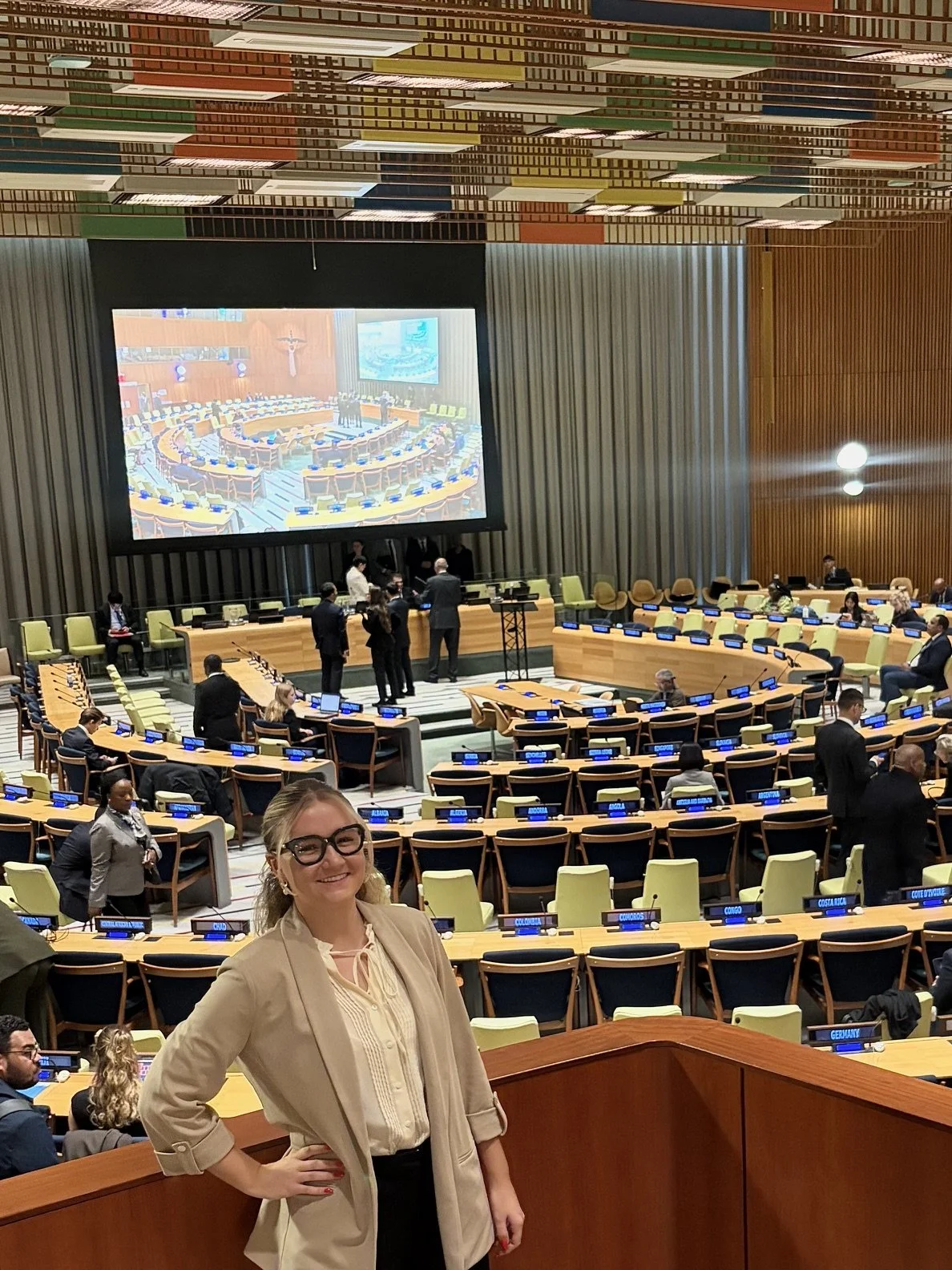
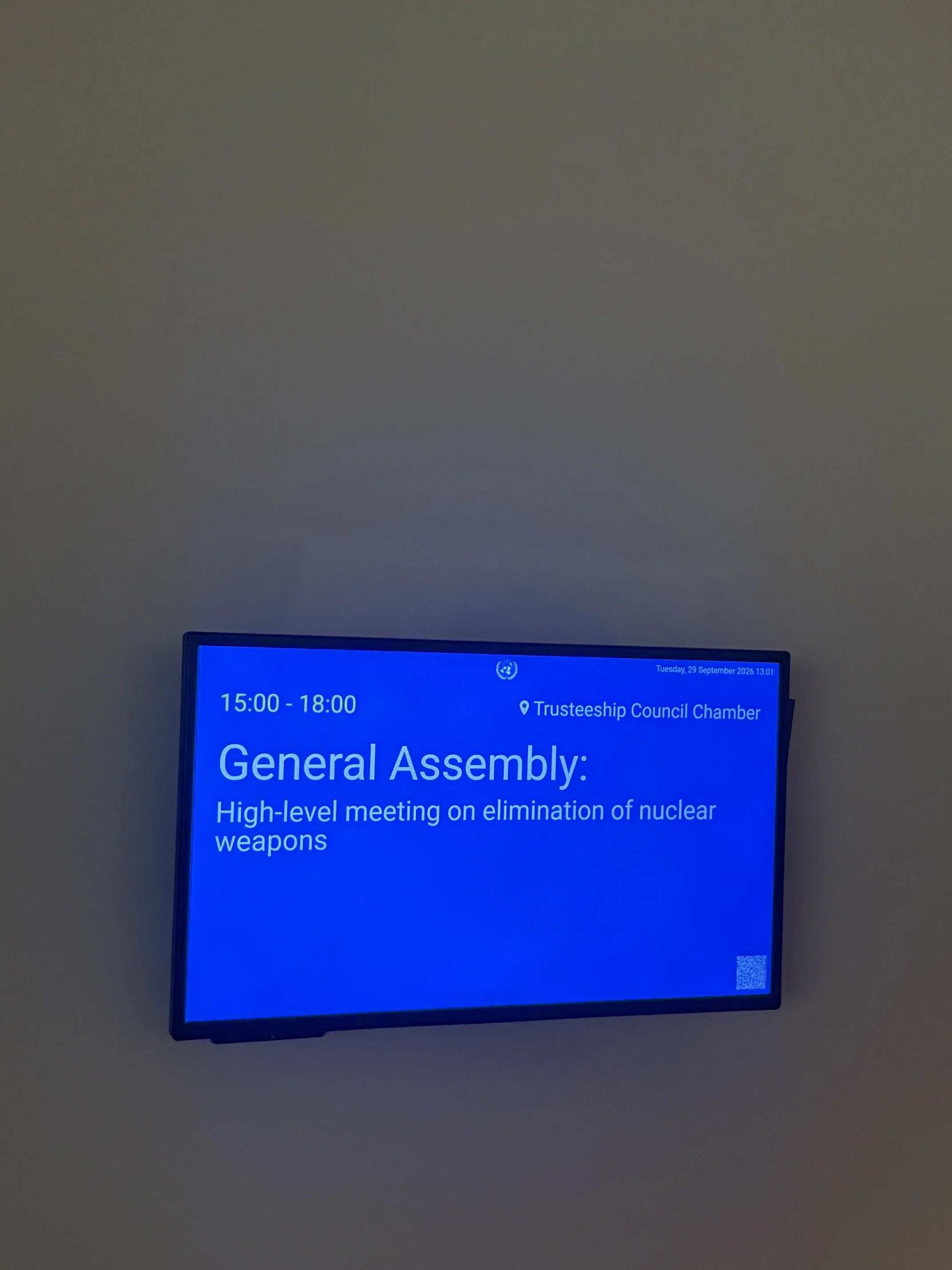
I was recently nominated as a delegate to the UN, representing UNA-USA, to attend the General Assembly High-Level Meeting on Nuclear Disarmament. The event was held at the UN headquarters in New York City during High-Level General Assembly Week. Each year this important meeting commemorates the 26th of September as the International Day for the Total Elimination of Nuclear Weapons. As a civil service delegate, I witnessed the entire day's proceedings in real time.
Nuclear disarmament was the first resolution at the UN in 1946, and eighty years later it remains a critical topic, now more than ever. The annual meeting reminds us that the world is still far from complete nuclear disarmament. Nine nations still actively possess weapons, with a current total of 12,187 remaining in arsenals worldwide. This day allows nations a chance to voice their commitments to nuclear disarmament and reassert their stances on this threat.
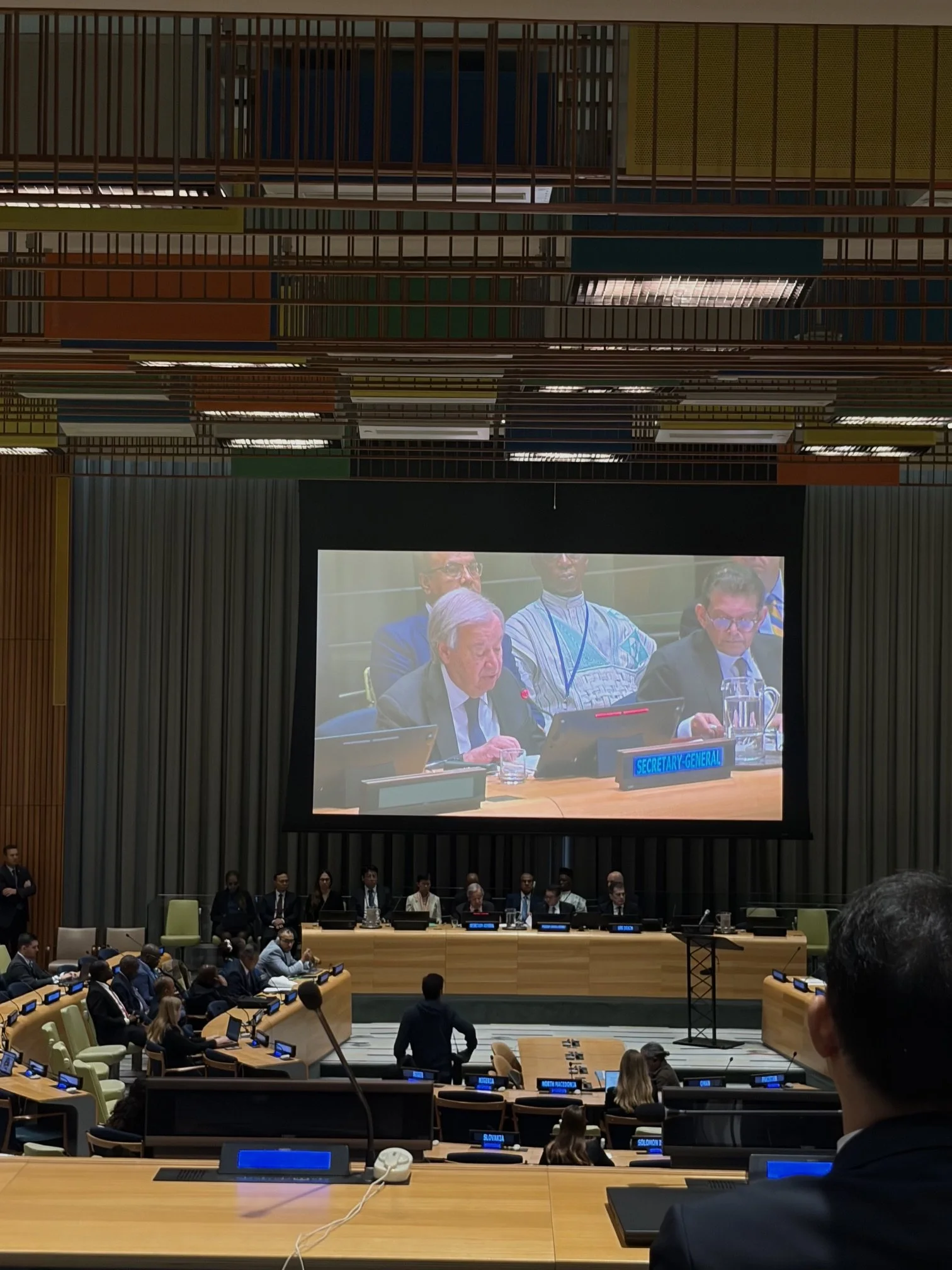
The meeting began with opening statements from the President of the 81st General Assembly, Dr. Khalilur Rahman of Bangladesh, and, following, from the current Secretary-General Antonio Guterres, who reminded the international community of the impending dangers of nuclear disaster if actions are not taken: "We meet at the most dangerous nuclear moment since the end of the Cold War. Eighty-one years after Hiroshima and Nagasaki, nuclear weapons continue to cast a shadow over humanity. And that shadow is darkening" (Guterres). This meeting comes as the eleventh review conference of the Treaty on the Non-Proliferation of Nuclear Weapons failed to reach an outcome, and the United Nations Disarmament Commission finished its third-year cycle without recommendations.
The floor opened to statements from state delegates. They were allotted three minutes to present their nation's position. Of the 100 nations present, over 80 delivered statements. It was incredibly interesting to hear each nation's stance on nuclear non-proliferation.
Several patterns became clear; the first was frustration. Indonesia, Palestine, Saudi Arabia, and Vietnam all pointed out that the Non-Proliferation Treaty review conference had failed to reach consensus for the third straight year, and Vietnam's representative added that he had presided over that conference. Several delegations also returned to Article 6 of the treaty, which makes disarmament a legal obligation, and Indonesia said the gap between commitments and actions continues to widen. Nation after nation said the same thing in different words: the commitments exist, but the action does not.
Three nuclear-armed states also spoke, and their statements followed a similar pattern. India called nuclear weapons the greatest danger to humankind and backed step-by-step, verifiable disarmament, while describing itself as a responsible nuclear weapons state committed to credible minimum deterrence and no first use. Pakistan reaffirmed a world free of nuclear weapons with undiminished security for all, but spoke of great power rivalry and unsettled disputes, and said norms are applied selectively while nuclear-armed states pursue hegemonic designs. China called for the complete prohibition and destruction of nuclear weapons and a treaty on mutual no first use, but directed its criticism at "a certain country" it did not name, while describing its own arsenal as the minimum needed for self-defense. All three backed disarmament in principle, but all three framed it as a gradual process that depends on mutual trust and undiminished security. Hearing that from three nuclear-armed states in one day showed me how complicated this conversation is.
The statements that remained with me most came from the small island states. Kiribati said that 33 nuclear tests were conducted at and near the Christmas and Malden Islands between 1957 and 1962, over its reefs, lagoons, and fishing grounds, and that nearly seven decades later it still does not fully know what remains in its waters. Fiji, speaking for twelve Pacific small island states, said that more than 300 tests were carried out across the region between 1946 and 1996, and that their consequences remain in contaminated land and waters and in health effects carried throughout generations. Palau, speaking for the Pacific Islands Forum, recalled that parts of the Pacific were treated as a testing ground for foreign powers and framed the issue as a human rights matter for affected communities. Samoa spoke about the health of the ocean, and New Zealand aligned itself with its Pacific neighbors and called on all states to renounce their arsenals.
Nuclear-weapon-free zones also came up frequently. These are regions where countries have agreed by treaty not to have nuclear weapons, and many delegations spoke about theirs with pride. Latin America had the first, through the Treaty of Tlatelolco, and the Pacific, Southeast Asia, Africa, and Central Asia have since created their own. Gambia, Tanzania, Kenya, Nigeria, Ethiopia, and the African Union all reaffirmed Africa's zone under the Treaty of Pelindaba and urged other states to ratify it. Suriname and Trinidad and Tobago spoke for Latin America, Fiji and Palau for the Pacific, Cambodia for Southeast Asia, and Kazakhstan for Central Asia. Palestine, Uganda, Algeria, and the Arab Group called for a zone in the Middle East. The African Union brought up an important point that much of the uranium used to build nuclear weapons was taken from African resources.
Other themes ran through the day. Palestine, Saudi Arabia, and the Arab Group pressed Israel, which is outside the Non-Proliferation Treaty and does not publicly acknowledge its arsenal, to join the treaty. Iran condemned attacks on its peaceful nuclear facilities, and the United Arab Emirates condemned a drone attack on its Barakah nuclear plant. Ukraine reminded the room that it voluntarily gave up the third-largest nuclear arsenal in the world, and it, along with Ireland, called on the international community to hold Russia accountable. The Arab Group, Mexico on behalf of the Latin American nuclear-weapon-free zone, the Holy See, Ireland, and ICAN each raised the risks of artificial intelligence in nuclear systems, and Indonesia challenged the idea that nuclear deterrence makes anyone safer. ICAN called deterrence a reckless gamble.
Civil society closed out the meeting. The International Committee of the Red Cross noted that disarmament was one of the UN's first actions and that, eighty years later, we are walking backward. Peace Boat, which works with survivors of Hiroshima and Nagasaki, reminded the room that nuclear weapons are an issue of human rights and dignity.
By the end of the day, what I found most interesting was that most nations agreed on the need to eliminate nuclear weapons. The real problem is that the states that possess them are not moving toward disarmament. Instead, they are modernizing and expanding their arsenals, and none of the nine nuclear-armed states has joined the Treaty on the Prohibition of Nuclear Weapons. Its first Review Conference will be held in New York from November 30 to December 4, and many delegations pointed to it as the next opportunity for progress.
The issue is not likely to be resolved soon. Powerful nuclear states will keep their weapons until they see a reason to give them up, and many will continue to use them as a form of coercion. As tensions rise, the risk of an accidental nuclear conflict hangs over the entire world. The rest of the world, meanwhile, continues to urge the nuclear-armed states to put humanity first.